Yotpo vs Subscribfy: Loyalty Points or Paid Membership?
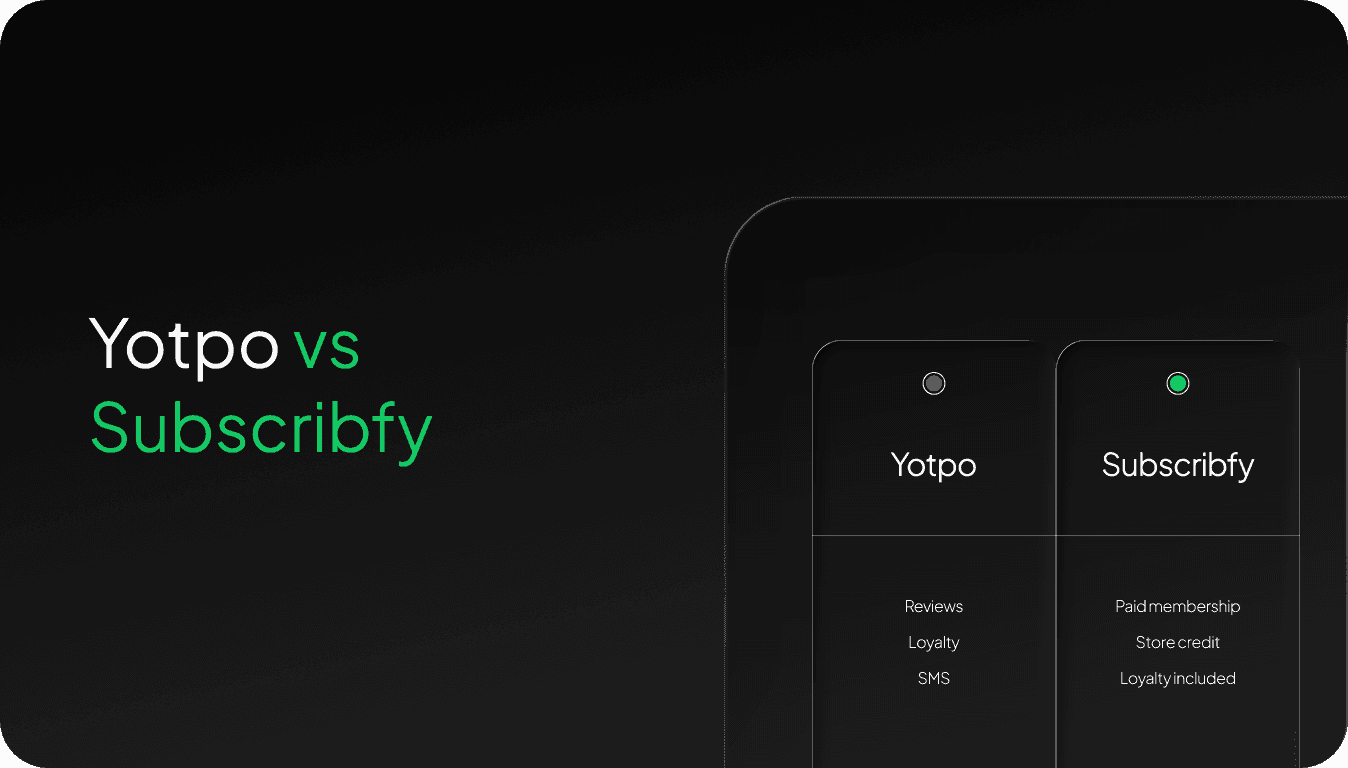
Yotpo sells reviews, loyalty and SMS. Subscribfy sells paid memberships with loyalty included. Here is how the two compare, and why you may not have to choose.
Brands comparing Yotpo vs Subscribfy often start from the same frustration. The loyalty program is live, customers are enrolled, points are piling up, and repeat purchase rate has barely moved.
Yotpo is a well-known suite on Shopify covering reviews, loyalty and SMS. Subscribfy is a retention platform built around paid membership: customers pay a monthly fee, get it back as store credit and receive perks, with a points program included for membership clients. They solve overlapping problems with very different mechanics.
The most useful fact in this comparison is that you do not have to pick one: a paid membership can sit on top of the points program you already run.
Yotpo vs Subscribfy: what is the difference?
Yotpo is a suite of separate tools, reviews, loyalty and SMS, where loyalty means earning and redeeming points. Subscribfy is built around paid membership with store credit, and includes loyalty, subscriptions, wallet pass and chargeback prevention in one platform. Yotpo does not sell a paid membership product.
Yotpo | Subscribfy | |
|---|---|---|
Core products | Reviews, loyalty, SMS | Paid membership, loyalty, subscriptions, wallet pass, chargeback prevention |
Loyalty model | Points, rewards, VIP tiers | Paid membership with store credit, plus points and VIP tiers |
Paid membership | Not offered | Core product |
Generates recurring revenue | No | Yes, membership fees collected upfront |
Pricing | See Yotpo for current plans | Pro $199/month + 1.49% + 25¢; Elite $499/month + 1.25% + 19¢ per membership transaction |
Subscribfy’s full plan details are on our pricing page.
Yotpo vs Subscribfy: can you run both together?
Yes. A paid membership can sit on top of an existing points program. Dossier added Dossier+ on top of its loyalty program: members show a 144% higher LTV than non-members, and 48% of shoppers opt in to the membership at checkout.
The full numbers are in the Dossier case study: close to 50,000 active members, 200,000 shoppers who joined, and members opening and interacting with marketing emails four times more often.
Sergio Tache, Dossier’s founder and CEO, put the business effect plainly: having 50,000 members who come back every month has reduced the need to increase ad spend to hit growth goals.
That is the layered model. Points keep casual customers engaged. Membership locks in the best ones. A customer who pays to belong and accumulates points toward a reward is the hardest customer to lose.
Why do points programs plateau?
Because points arrive after the purchase. Antavo’s 2026 Global Customer Loyalty Report found that over a quarter of loyalty points go unspent and 11.9% expire unspent. A reward the customer can put off does not change what they do next.
Store credit works the other way: the member has already paid, so spending the credit feels like using their own money. Average discount per member ends up lower than for non-members, because credit replaces the discount.
McKinsey’s 2020 survey on paid loyalty reaches the same conclusion from the consumer side: members of paid programs were 60% more likely to spend more on the brand after joining, against 30% for free programs.
How much would a membership add to a Yotpo stack?
The Subscribfy fee is a $199 flat monthly fee on Pro, plus 1.49% and 25¢ per membership charge. For example, with 1,000 members paying $30 a month, the platform costs about $896 a month, based on published pricing. The brand collects $30,000 in membership fees, which members then spend as store credit.
The math: $199 + 1.49% of $30,000 ($447) + 25¢ × 1,000 charges ($250) = $896.
If you keep Yotpo for reviews and SMS, you add that cost and that revenue. If you also move points into Subscribfy, where loyalty is included for membership clients, you remove the Yotpo loyalty line. Check your current Yotpo contract to see which products you are paying for separately.
Want the numbers modeled on your Yotpo data? Book 30 minutes with our CEO.
When should you stay with Yotpo alone?
Stay with Yotpo alone if your customers rarely buy twice, your loyalty program is doing its job, or you mainly need reviews and SMS. A paid membership monetizes a repeat habit; if the habit is not there yet, fix acquisition and the second purchase first.
When should a Yotpo brand add Subscribfy?
Add Subscribfy when you have a base of repeat customers, your points program has stopped moving repeat rate, and you would rather turn your best customers into prepaid revenue than keep discounting to bring them back.
Other brands in categories without natural repeat logic show how far this can go. Tres Colori, a jewelry brand, now generates 50% of total revenue from members.
A typical Subscribfy launch takes two to three weeks and does not require replacing your checkout or your reviews app. Book 30 minutes with our CEO and we will model a membership on your Yotpo data.
Frequently asked questions
Does Yotpo offer a paid membership?
Yotpo’s loyalty product is built around points, rewards and VIP tiers. It does not sell a paid membership that returns a monthly fee as store credit.
Can Subscribfy replace Yotpo Loyalty?
Yes. Subscribfy includes points, referrals, VIP tiers and punch cards for membership clients. It does not replace Yotpo’s reviews or SMS products.
Can I keep my existing points program and add a membership?
Yes. Dossier added its Dossier+ membership on Subscribfy on top of its existing loyalty program.
Is a paid membership better than a points program?
For customers who already buy repeatedly, usually yes, because members prepay and then spend credit they own. For brands with few repeat buyers, a points program is a better first step.
How long does it take to add Subscribfy next to Yotpo?
A typical launch takes two to three weeks, and Yotpo keeps running throughout.

Book a meeting with our sales team now!
Create predictable revenue from the customers you already have.