WHAT'S THE DIFFERENCE BETWEEN A MEMBER AND A SUBSCRIBER IN 2026?
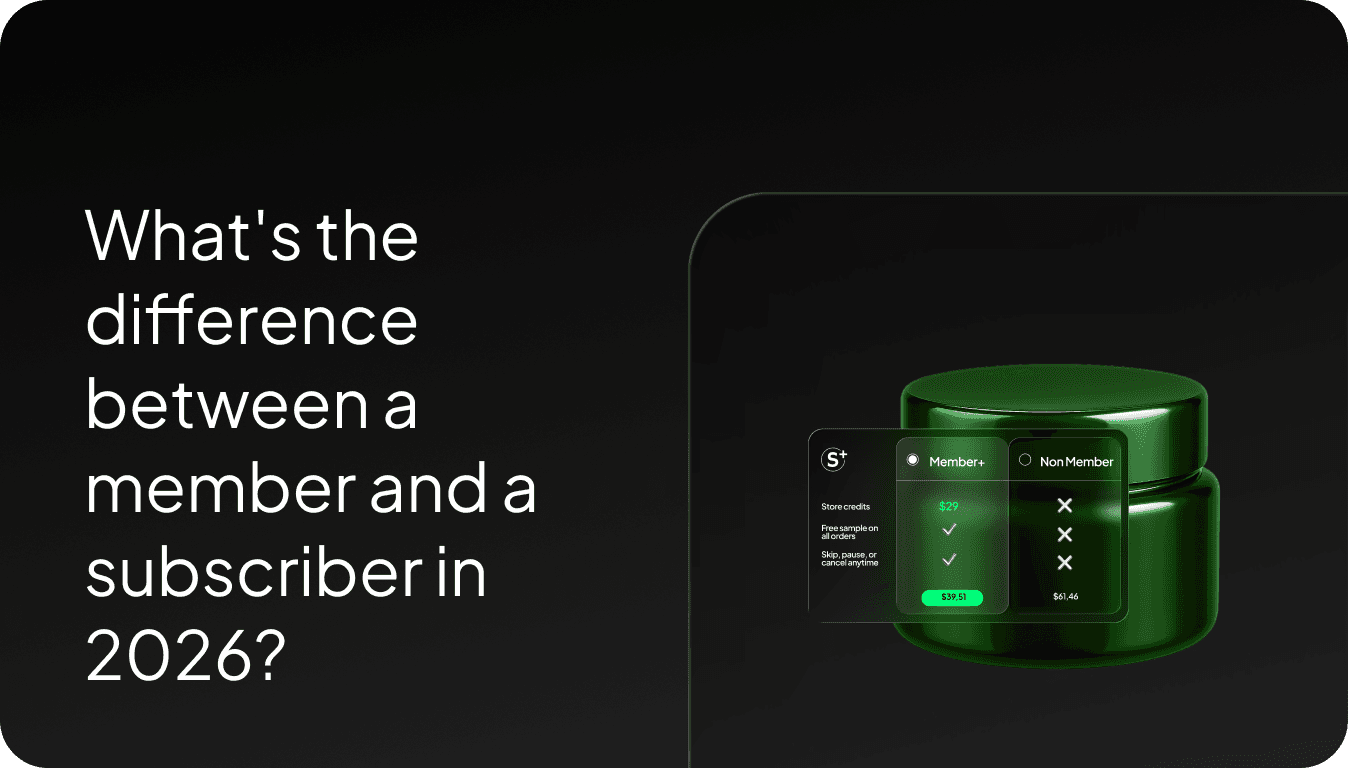
Most brands confuse these terms and build the wrong retention strategy. Here's why understanding the distinction determines your customer lifetime value.
The confusion between members and subscribers costs brands millions in retention revenue every year. Most businesses use these terms interchangeably, but they represent fundamentally different customer relationships that require completely different strategies.
A subscriber pays for recurring product delivery. A member pays for ongoing access to benefits, community, and exclusive experiences. The difference is not semantic. It is strategic. Getting it wrong explains why 67% of subscription programs fail within their first year.
The Core Distinction: Products vs. Relationships
Subscribers buy recurring products. They want convenience, consistency, and often cost savings through auto-delivery. Think Dollar Shave Club sending razors monthly or HelloFresh delivering meal kits weekly. The value proposition is transactional: send customers what they need when they need it.
Members buy ongoing relationships. They want exclusive access, premium experiences, and insider status. Think Costco's annual membership fee for wholesale pricing or Amazon Prime's monthly fee for shipping benefits plus entertainment. The value proposition is relational: you belong to something valuable.
This distinction shapes everything: pricing models, retention tactics, customer expectations, and ultimately, lifetime value performance.
Why the Psychology Matters More Than the Price
When someone subscribes to a product, they are solving a specific problem. When that problem changes or they find a better solution, they cancel. The relationship is conditional.
When someone pays to become a member, they are making an identity choice. They are saying they are the type of person who shops here. That psychological shift creates stickiness that transcends individual transactions.
Research from McKinsey shows paid loyalty members are 60% more likely to spend more than free program members. The retention curves diverge after month six, when product subscribers start churning but paid members double down.
The Adore Me Case Study: From Subscription to Membership
Adore Me started as a traditional lingerie subscription in 2010, sending curated boxes monthly. By 2015, they had pivoted to a credit-based membership model where customers paid monthly and received store credit plus exclusive benefits.
The results were dramatic. Member lifetime value increased 157% compared to their subscription customers. Credit feels like money customers already own, creating urgency to return and spend it. Subscription boxes, by contrast, often created decision fatigue and closet overflow.
When Victoria's Secret acquired Adore Me for approximately $400 million in 2023, the membership infrastructure was the primary valuation driver. Adore Me represented only 5% of VS revenue but commanded 30% of the acquisition value. That is membership economics at work.
Common Membership vs. Subscription Models
Subscription models that work:
Replenishment products (razors, supplements, pet food)
Content delivery (software, streaming, news)
Curated discovery (beauty boxes, wine clubs)
Service access (meal delivery, fitness apps)
Membership models that work:
Store credit plus perks (fashion, beauty, lifestyle)
Wholesale pricing access (warehouse clubs)
Service bundles (Amazon Prime, Costco Executive)
Community access (professional networks, creator platforms)
The key difference: subscriptions deliver products. Memberships deliver ongoing value that compounds over time.
How Brands Choose the Wrong Model
Most brands default to subscriptions because they seem simpler. Send the product monthly and charge monthly. But this approach fails when:
Products are not naturally recurring. You cannot subscribe to jewelry or furniture meaningfully.
Customers want choice, not curation. Many prefer selecting products rather than receiving predetermined items.
Storage becomes an issue. Subscription boxes pile up when customers cannot keep pace with deliveries.
Membership works across any product category because it is about relationship, not replenishment. Pair Eyewear proved this by launching a membership for eyewear, a category where traditional subscriptions make no sense. Members pay monthly for store credit and exclusive access, achieving 157% higher LTV than non-members.
The Credit-First Membership Revolution
The most successful membership programs today use store credit as the primary benefit. Instead of discounts or points, members receive immediate credit equal to or greater than their monthly payment.
This model works because credit feels like money customers already own, creating psychological ownership and urgency to return. Tres Colori jewelry saw 48% of total revenue come from members using this approach, with an 84% credit redemption rate.
Compare that to traditional loyalty points: roughly 30% of all loyalty points issued are never redeemed, sitting unused in accounts. Points feel like play money. Credit feels like real money.
Building the Right Model for Your Brand
Choose subscriptions when:
Your product needs regular replenishment
Customers value convenience over choice
Usage is predictable and consistent
The product experience improves with regularity
Choose membership when:
Customers make varied, unpredictable purchases
You want to increase shopping frequency across product lines
Your brand has premium positioning
Customer lifetime value matters more than transaction volume
Choose both when:
You have core products that replenish and a broader catalog
Different customer segments want different relationships
You are optimizing for maximum retention across all segments
The Integration Advantage
The most sophisticated retention strategies combine membership and subscription elements. Subscribfy's integrated platform lets brands run both programs simultaneously, with membership driving high-value customers and subscriptions handling replenishment needs.
This dual approach captures different customer behaviors. Some want the convenience of auto-delivery. Others want the flexibility of credit-based shopping. Running both programs through one system creates data visibility and strategic alignment that separate tools cannot match.
The brands winning retention in 2026 understand this distinction and build accordingly. They know that members and subscribers require different acquisition, retention, and reactivation strategies. They design experiences that match customer psychology, not just operational convenience.
Getting the terminology right is the starting point. Getting the strategy right is what drives sustainable growth and premium valuations in today's retention economy.

Book a meeting with our sales team now!
Create predictable revenue from the customers you already have.