Membership and Subscription: What's the Real Difference?
The complete breakdown of two business models that brands constantly confuse - and why getting it wrong costs you customers.
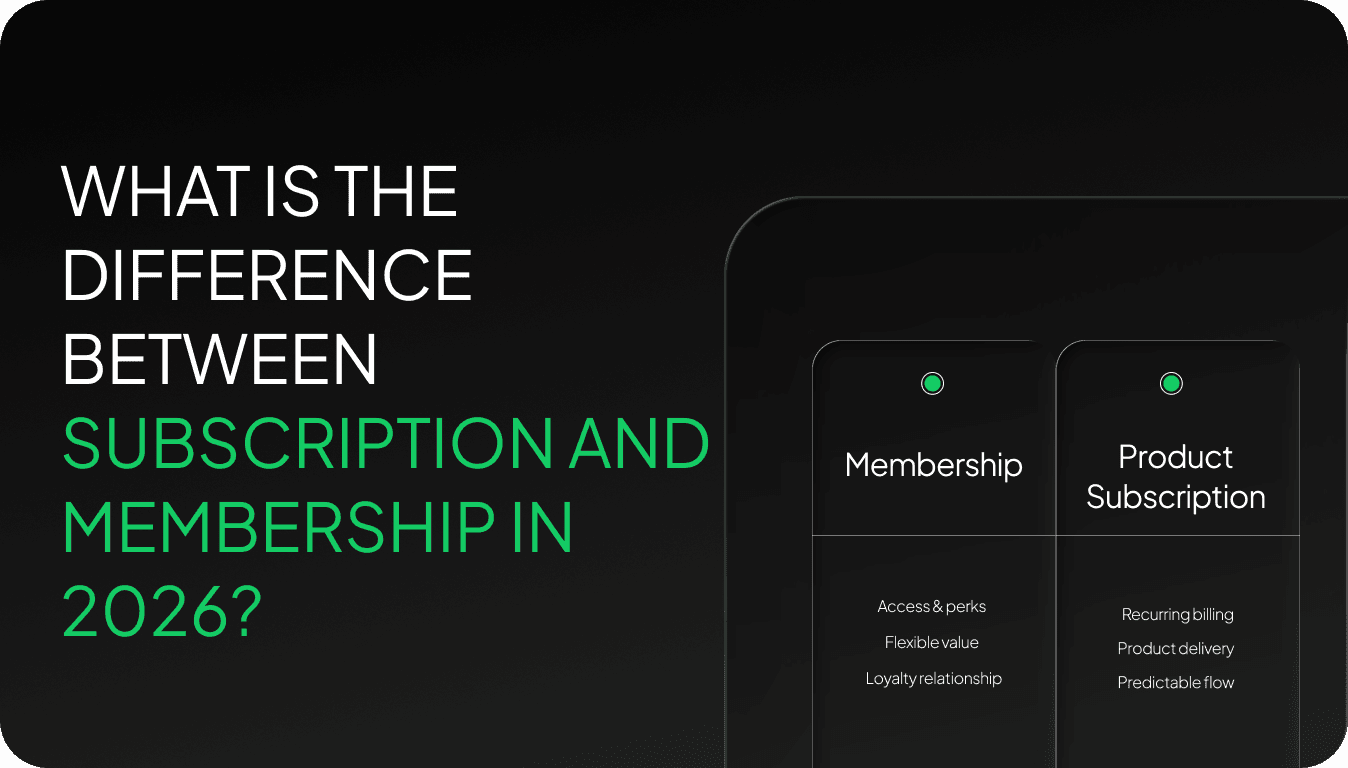
The difference between subscription and membership comes down to what the customer is paying for. Subscriptions charge customers for receiving products on a recurring schedule. Memberships charge customers for ongoing access to benefits, perks, and exclusive experiences.
Think Netflix (subscription to content delivery) versus Costco (membership for shopping privileges and wholesale pricing). Both collect recurring revenue, but the customer psychology is completely different.
The Core Psychological Difference
Subscriptions feel like convenience. You’re paying to have something delivered automatically so you don’t have to think about reordering. The value is in the automation and consistency.
Memberships feel like belonging. You’re paying to be part of an exclusive group with special privileges that non-members don’t get. The value is in the status and access.
This psychological difference drives everything else: pricing strategies, customer acquisition, retention tactics, and long-term business economics. According to McKinsey research, subscription businesses focus on operational efficiency and churn reduction, while membership businesses focus on community building and exclusive value creation.
How Subscriptions Work
Subscriptions are built around recurring product delivery:
Coffee subscriptions: Monthly shipment of coffee beans to your door
Beauty boxes: Curated products delivered quarterly
Razor subscriptions: New blades shipped every 6 weeks
Meal kits: Weekly ingredients and recipes
The customer commits to receiving products on a schedule. They’re buying convenience and consistency. The relationship ends when they no longer want the automatic deliveries.
Subscription e-commerce has grown 435% over the past decade, but average retention rates hover around 40% after 12 months. The challenge: once the novelty wears off or customer needs change, there’s no compelling reason to stay subscribed.
How Memberships Work
Memberships are built around recurring access to benefits:
Amazon Prime: Pay annually for free shipping, streaming, and exclusive deals
Costco: Pay annually for wholesale pricing and bulk purchasing
American Express: Pay annually for travel perks and concierge services
Patreon: Pay monthly for exclusive creator content and community access
The customer commits to ongoing access to a bundle of privileges. They’re buying status, savings, and exclusive experiences. The relationship strengthens over time as they use more benefits and feel more invested in their membership status.
Membership businesses typically see 80-90% retention rates because the value compounds. The more you use your membership, the more valuable it becomes.
The Business Model Economics
Subscription economics optimize for product margins and fulfillment efficiency. Revenue comes from markup on products shipped. Growth comes from acquiring more subscribers and reducing shipping costs.
Membership economics optimize for benefit utilization and lifetime value. Revenue comes from membership fees, often supplemented by additional purchases. Growth comes from increasing member engagement and expanding benefit offerings.
Consider the numbers: Subscription box companies average 15-20% profit margins, while membership programs can reach 40-60% margins because membership fees aren’t tied to product costs.
Which Model Fits Your Brand?
Choose subscriptions if:
You sell consumable products that customers reorder regularly
Your value proposition is convenience and consistency
You can predict customer usage patterns accurately
You have strong supply chain and fulfillment capabilities
Choose memberships if:
You sell products across multiple categories
Your customers shop infrequently but value exclusive access
You can create compelling non-product benefits (early access, exclusive sales, content)
You want to build a community around your brand
Churn Drivers Are Completely Different
Subscription churn is usually triggered by a specific event: a bad experience, a price increase, a product they didn’t use. Most subscription cancellations tend to cluster in the first few months, before a real habit has had time to form.
Membership churn works differently. Members don’t cancel because they forgot to use the product. They cancel when they feel the status is no longer worth it, when the exclusivity disappears, when the benefits get diluted, or when they feel unrecognized.
Membership requires operational focus. That’s not a weakness of the model. It’s the price of the moat it builds.
The Opt-In Psychology Is Fundamentally Different
Subscriptions are convenient. Memberships are aspirational.
When someone opts into a subscription, they’re saying: “This is easier than buying repeatedly.” When someone joins a membership, they’re saying: “I want to be part of this.”
That psychological gap drives massive differences in checkout behavior. A sense of belonging tends to increase both willingness to pay and willingness to return, more consistently than convenience alone does.
Dossier, a fragrance brand, sees 48% of shoppers opt into their “Dossier+” membership at checkout. That is not a convenience decision. Nearly half of shoppers are choosing to join a community, not just sign up for an auto-ship. The Dossier case study shows a 144% higher LTV for members.
Store credit changes that behavior because the money already belongs to the customer. At Riversol, members have used 58% of their usable store credit. The same customer, given a different psychological frame, behaves differently.
Quick Reference: Membership vs. Subscription
Subscription | Membership | |
Core value | Delivery / convenience | Status / belonging |
Churn trigger | Bad experience, unused product | Diluted benefits, loss of exclusivity |
Customer psychology | “This is easier” | “I want to belong here” |
LTV impact | Moderate | +66% to +216% across verticals |
Works in all categories | No (replenishment-focused) | Yes (even jewelry, eyewear) |
If you’re a Shopify brand thinking about building a membership program, not a standard subscription, Subscribfy is the platform built specifically for that. The founding team ran membership at scale at Adore Me for over a decade. They know the operational difference between billing on a recurring basis and actually building a membership that retains customers.
The ROI simulator shows you what the economics could look like for your store before you commit to anything.
The Hybrid Approach That Actually Works
The most successful e-commerce brands in 2026 aren’t choosing between subscriptions and memberships. They’re layering them strategically.
Take Pair Eyewear’s approach: they launched “Pair+” membership where customers pay monthly and receive store credit plus exclusive benefits. Members use their credit whenever they want new frames or accessories. It’s membership psychology (exclusive access to benefits) with subscription convenience (predictable monthly billing).
The results: a +216% cash LTV bump for members after 16 months, with 38% of total revenue now coming from members.
The Store Credit Model Revolution
Traditional subscriptions ship products automatically. Traditional memberships provide access to benefits. But there’s a third model emerging: credit-first membership
Customers pay a monthly membership fee and receive store credit equal to or greater than what they pay, plus additional perks like percentage discounts and early access. The credit feels like money they already own, so they come back to spend it.
Riversol tested this model with their skincare line: $39/month membership that includes $39 in store credit plus 10% off all orders. Result: 62% increase in customer lifetime value and 28% of revenue from membership.
This model works because it combines the predictable billing of subscriptions with the exclusive benefits of membership, while giving customers complete control over when and what they purchase.
Implementation Strategy for 2026
Most brands start with the wrong question: “Should we do subscriptions or memberships?” The right question is: “What does our customer actually want to pay for?”
If they want convenience and autopilot purchasing, build subscriptions. If they want status and exclusive access, build membership. If they want flexibility with predictable value, consider the credit-first membership model.
The key is understanding customer psychology first, then building the recurring revenue model that matches their motivations.
For brands ready to test membership models, Subscribfy’s platform lets you launch credit-first membership in 2-3 weeks. You can validate the model with real customers before committing to a full membership infrastructure.
The difference between subscription and membership isn’t just semantic. It’s the difference between optimizing for convenience versus optimizing for belonging. Get that psychology right, and the economics follow.

Book a meeting with our sales team now!
Create predictable revenue from the customers you already have.