Paid Membership vs Free Loyalty Program: Which One Actually Drives Revenue
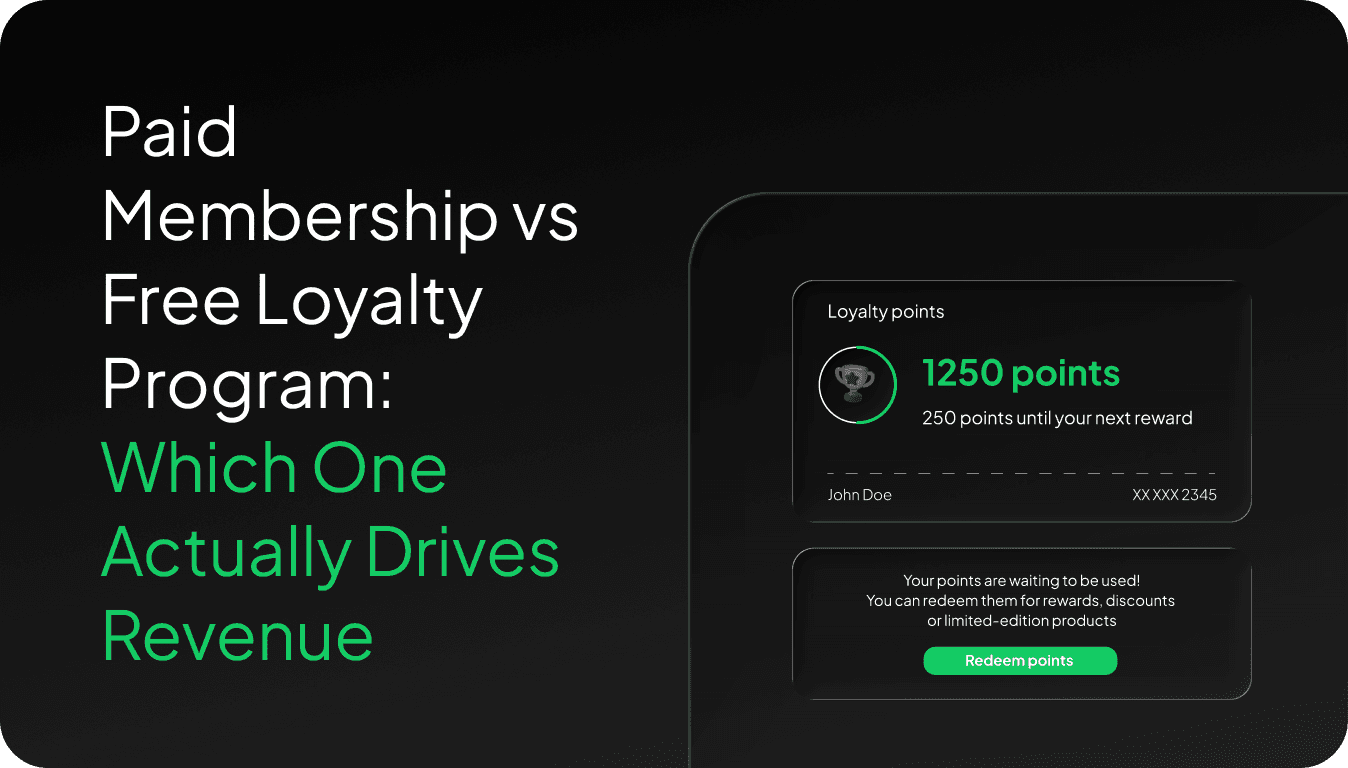
They solve different problems. Here's the honest comparison, and why the best answer for most brands is both, not either.
Every brand building a retention strategy eventually asks the same question: paid membership or free loyalty program? The honest answer is that they're not competing options solving the same problem. They're different tools addressing different parts of the customer relationship, and understanding that difference matters more than picking a winner.
What Free Loyalty Programs Actually Do Well
A free loyalty program removes the barrier to entry entirely. Anyone who's ever bought from you, or even just created an account, can join and start earning points. This makes free loyalty genuinely good at one specific thing: capturing first-party data and building a habit loop across your entire customer base, not just your most committed buyers.
The tradeoff is that free loyalty asks for no financial commitment, which means it creates no real switching cost. A customer who's free to join is equally free to leave the moment a competitor offers a marginally better discount, since they never had anything invested in staying.
What Paid Membership Actually Does Well
A paid membership works through a completely different mechanism. When someone pays to belong, their psychological relationship with the brand changes immediately. They've made a financial commitment, and that commitment creates a genuine switching cost, leaving means giving up something they already paid for, not just walking away from a free perk they never really valued.
This is why paid membership programs consistently show stronger lifetime value results than free loyalty alone. Pair Eyewear's paid membership drives 216% higher lifetime value per member compared to non-members. Tres Colori generates 50% of total revenue from its paid membership base. The mechanism isn't complicated: a customer who paid to join has a reason to keep engaging that a free loyalty member simply doesn't have.
The Real Weakness of Running Only One or the Other
A store running only free loyalty leaves real revenue on the table from its most engaged customers, the ones who would happily pay for a deeper relationship if asked, but who've never been given that option. A store running only paid membership, with no free entry point, misses the chance to build a broad base of engaged, data-rich customers who aren't ready for a financial commitment yet but could be converted later.
Neither approach alone captures the full range of your customer base. A first-time visitor and a ten-time repeat buyer are at completely different points in their relationship with your brand, and a single program, free or paid, treats them identically.
Why the Two Work Better Combined Than Separately
The strongest retention structures run both simultaneously, using each program for what it's actually good at. Free loyalty captures every customer's engagement and data from day one. Paid membership converts your most engaged loyalty members into a smaller, higher-value tier once they've demonstrated real interest in the brand.
This combination creates something neither program achieves alone: a natural upgrade path. A customer who's already active in your free loyalty program, redeeming points, engaging with content, coming back regularly, is a far easier convert to paid membership than a cold prospect, since they've already proven the relationship has value to them. The data backs this up directly: a meaningful share of loyalty members say they'd upgrade to a paid tier if the benefits were made clear, they're already there, they just haven't been asked yet.
A customer who pays to belong and accumulates points toward a reward simultaneously is the hardest customer to lose a brand can build. Two separate forces, financial commitment and progress toward a goal, reinforcing each other rather than working in isolation.
How to Decide Where to Start
If you're building retention infrastructure from scratch, free loyalty is usually the right starting point, since it requires no upfront customer commitment and starts generating data and engagement immediately. Paid membership becomes the natural next layer once you can see which segment of your loyalty base is engaged enough to justify the upsell, using real behavioral data (redemption frequency, order count, engagement score) rather than guessing at who's ready.
If you already have a mature loyalty program and haven't introduced a paid tier, that's very likely uncaptured revenue sitting in your existing customer base right now, not a hypothetical future opportunity.
Subscribfy runs both loyalty and paid membership as a single connected system, built specifically so the two layers reinforce each other instead of running as separate, disconnected programs. If you want to see what combining them could look like for your own store, book a 30-minute walkthrough with Subscribfy's team.

Book a meeting with our sales team now!
Create predictable revenue from the customers you already have.