Apple Wallet Pass: The Ecommerce Retention Hack Nobody Talks About
Most brands are paying for SMS and email opens they're never getting. This one channel sits on every iPhone, costs almost nothing, and most brands ignore it completely.
The Most Underused Real Estate in Mobile Commerce
Your customer’s lock screen is the most valuable piece of real estate in mobile. It’s the first thing they see when they pick up their phone. And there’s a channel sitting right there, Apple Wallet, that most ecommerce brands have never touched.
Not because it doesn’t work. Because nobody told them it exists as a marketing tool.
Apple Wallet passes are typically associated with boarding passes and coffee shop loyalty cards. That framing has caused almost every DTC brand to ignore it entirely. That’s a mistake worth correcting.
What an Apple Wallet Pass Actually Is (for Ecommerce)
An Apple Wallet pass is a digital card stored natively on iOS, accessible from the lock screen without opening any app. The equivalent exists on Android through Google Wallet.
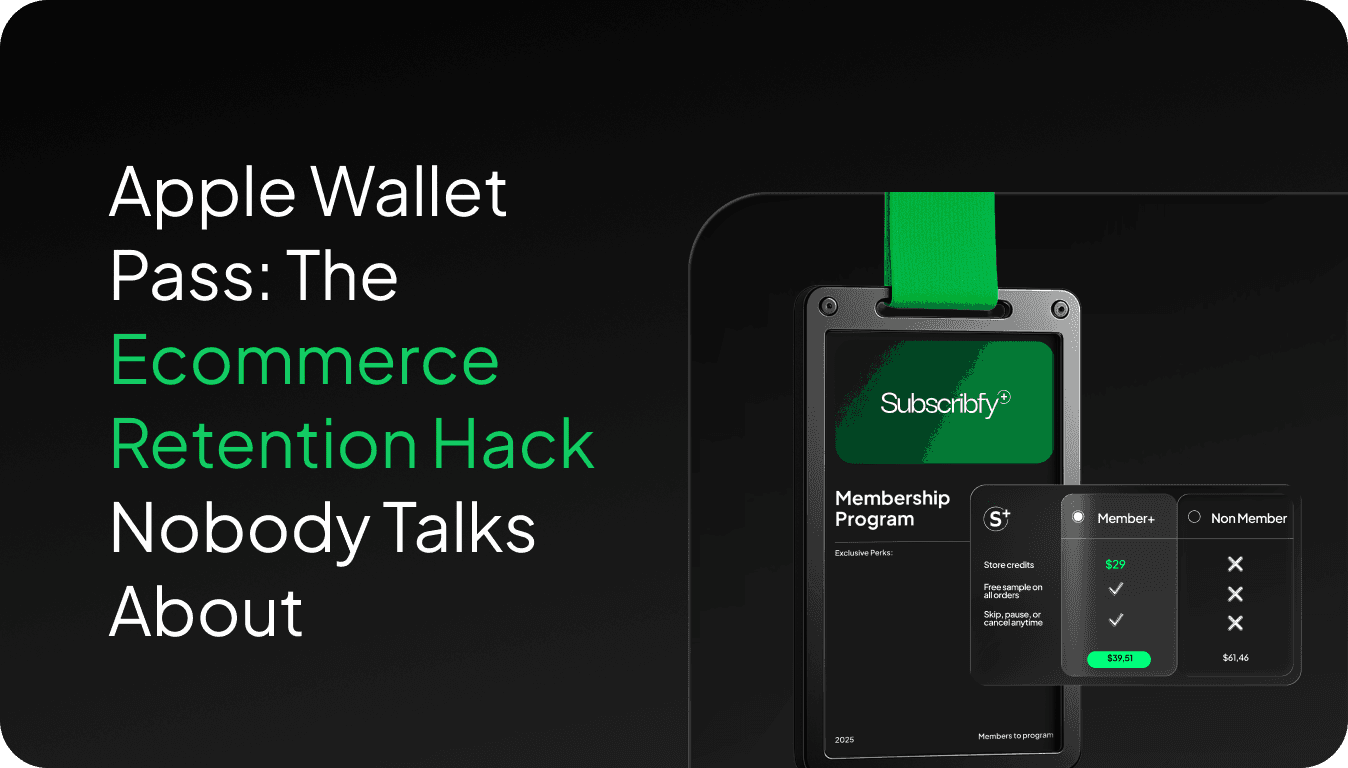
For ecommerce, the pass becomes a portable membership card, VIP badge, store credit balance display, or loyalty card that lives permanently on your customer’s phone. You don’t need to build an app. Your customer doesn’t need to download anything. The pass installs in two taps.
The real value isn’t the card itself. It’s what the card enables: push notifications directly to the lock screen, triggered by anything you choose.
Why This Matters: The Push Notification Problem
SMS open rates hover around 98%, which sounds incredible, until you look at the cost. Standard SMS in the US typically runs roughly $0.01 to $0.05 per message, depending on volume, carrier, and country. For a list of 50,000 customers, a single campaign costs $500 to $2,500. And that’s before you account for opt-out rates climbing every year as customers get more protective of their phone numbers.
Email is cheaper but noisier. Industry benchmark data consistently puts the average ecommerce marketing email open rate around 18-25% for regular campaigns, well below welcome-flow rates. Most promotional emails never get read.
Apple Wallet push notifications cost essentially nothing per send. They land on the lock screen. They don’t require an email open or an SMS opt-in. The customer already installed the pass, that was the opt-in.
This is the ecommerce hack: a zero-marginal-cost push channel with lock screen placement, no app required.
The Geolocation Trigger Nobody Is Using
Here’s where it gets genuinely interesting.
Apple Wallet passes support geolocation-based notifications. You set a location, a physical store, a pop-up event, a market booth, a partner location, and any customer with your pass gets a push notification when they walk within range of that location.
Set it up once. It runs automatically. Forever.
The use cases write themselves: a brand with one pop-up a month can ping every member the moment they walk past. A brand doing a retail partnership can alert nearby customers that their store credit is waiting. A DTC brand opening a temporary showroom can drive foot traffic from existing customers without buying a single ad.
Research on personalized, timely marketing from McKinsey consistently shows that relevant, well-timed messages convert at meaningfully higher rates than generic broadcasts. The context makes the difference.
Most ecommerce brands have never used geolocation marketing at all. Most don’t have an app. Wallet passes remove both barriers.
Membership + Wallet Pass: Why They Work Better Together
A wallet pass in isolation is a useful tool. A wallet pass connected to a paid membership is something different.
When a customer joins your membership, they get a pass that displays their membership status, their current store credit balance, and their tier. Every time their credit changes, the pass updates. Every time something important happens, a credit is about to expire, a member sale is starting, they’re near your pop-up, they get a notification.
The pass makes the membership feel real and physical. Something they carry. Something they can show. Not just a status in an account dashboard they’ll never open.
Tres Colori, the jewelry brand, sees an 84% store credit redemption rate among members, meaning 84 out of every 100 members come back to use their credit. That’s among the highest redemption rates you’ll see in this industry. The combination of paying to belong, having credit that feels like money sitting in your account, and having a pass that reminds you of both is not a coincidence. You can see how they built it in the Tres Colori case study.
Compare that to the industry average for loyalty points: roughly 15% redemption. The difference between those two numbers is the difference between a retention program that works and one that looks good on a dashboard.
How to Actually Implement This
The friction point for most brands isn’t willingness, it’s technical complexity. Building a Wallet pass system from scratch means dealing with Apple’s PassKit API, certificate management, push notification infrastructure, and pass update logic. For most Shopify brands, that’s not realistic without a developer.
Subscribfy’s Wallet Pass product removes all of that. Passes are generated automatically when customers join a membership, loyalty program, or any defined segment. Push notifications are configured once and trigger on any event. Geolocation alerts are set by dropping a pin on a map.
The channel goes live in the same week you launch. No app review process. No separate developer contract.
The Real Question to Ask
If you have 10,000 customers and no app, you currently have no direct lock screen access to any of them outside of SMS and email.
Apple Wallet passes give you a third channel, one that’s cheaper per send than SMS, harder to ignore than email, and capable of location-triggered outreach that neither of those channels can do.
The brands winning on retention in 2026 aren’t finding a single magic tactic. They’re stacking channels that reinforce each other: email for narrative, SMS for urgency, Wallet for ambient presence on the device your customer carries everywhere.
The pass doesn’t replace anything. It fills the gap that every other channel leaves open: the moment your customer is physically close to you but hasn’t thought about you yet.
That’s the hack. Not a trick. Not a workaround. Just a channel most brands haven’t turned on yet, sitting on a device your customers already have in their pocket.
FAQ
Does Apple Wallet pass work for Shopify stores? Yes. With the right integration, Shopify stores can issue Wallet passes automatically to customers who join a membership or loyalty program. No app required on the brand side or the customer side.
Is Google Wallet supported too? Yes. Most platforms that support Apple Wallet passes also support Google Wallet, which covers Android users. Combined, the two platforms cover virtually the entire smartphone market.
How much do Wallet pass push notifications cost? Unlike SMS, Wallet pass push notifications do not carry a per-message fee. Once a customer has installed the pass, notifications are sent at no additional cost per send. The cost is in the platform subscription, not the message volume.
Can I trigger a Wallet pass notification when a customer’s store credit is about to expire? Yes. Any event in your membership or loyalty system, credit expiry, membership renewal, new sale, can trigger a push notification to the customer’s lock screen through the pass.

Book a meeting with our sales team now!
Create predictable revenue from the customers you already have.