WHAT IS AN EXAMPLE OF A SUBSCRIPTION-BASED E-COMMERCE MODEL? 5 REAL CASES THAT WORK IN 2026
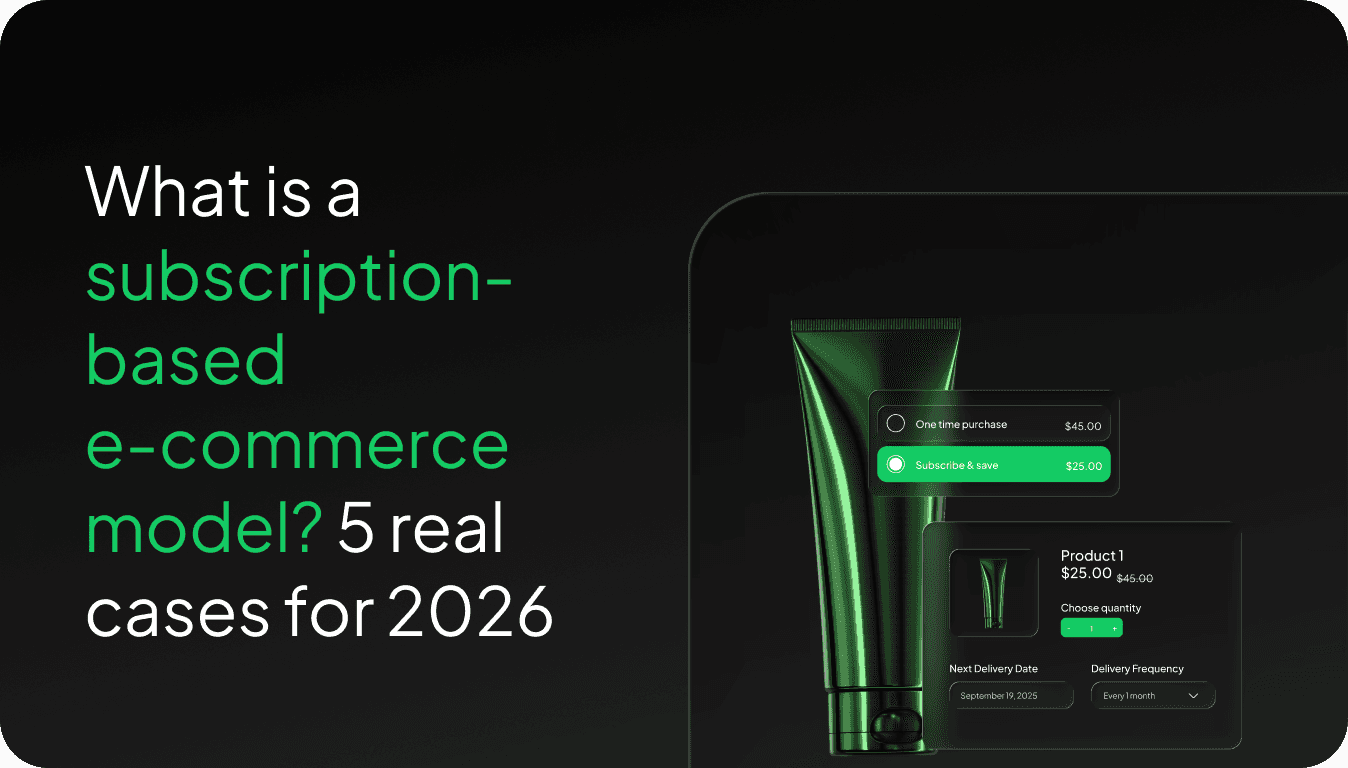
Real brands generate millions through recurring revenue models, from razors to skincare to eyewear that does not auto-ship.
Dollar Shave Club remains the gold standard example of a subscription-based e-commerce model. Customers pay $3–9 monthly and receive razor cartridges delivered automatically. The model hit $225 million in annual revenue before Unilever acquired the company for $1 billion in 2016.
Subscription e-commerce extends far beyond razors and replenishment products. The most successful models today combine predictable recurring revenue with customer choice and flexibility.
The Classic Replenishment Model: Razors and Essentials
Dollar Shave Club pioneered the direct-to-consumer subscription model that dozens of brands now replicate. The formula is simple: identify a product customers use regularly, eliminate the friction of remembering to reorder, and deliver automatically.
Similar examples include:
Harry’s: Premium shaving subscriptions with customizable delivery frequency
Quip: Electric toothbrush heads delivered every three months
Native: Deodorant subscriptions based on usage patterns
The key insight: customers hate running out of essentials. Subscriptions solve a real problem while creating predictable revenue streams.
The Curation Model: Discovery Through Boxes
Birchbox transformed beauty retail by curating sample-sized products into monthly discovery boxes. For $13 monthly, subscribers receive 4–5 personalized beauty samples. The model generates revenue from subscriptions and full-size product purchases.
Stitch Fix applies curation to fashion. Customers complete style profiles, receive personalized clothing selections, keep what they want, and return the rest. Revenue comes from styling fees and product sales.
This model works because discovery has value. Customers pay for convenience and personalization they cannot get elsewhere.
The Access Model: Membership-First Subscriptions
The most sophisticated subscription models do not just deliver products. They create ongoing relationships through membership benefits.
Pair Eyewear proves subscriptions work even for infrequent purchases. Their Pair+ membership does not auto-ship glasses monthly. Instead, members pay $25 monthly and receive $25 in store credit plus 10% off all orders. Members achieve 157% higher lifetime value compared to one-time buyers.
This approach works because store credit feels like money customers already own. They return to spend it, creating repeat engagement without forced purchases.
The Content + Commerce Model: Education Drives Sales
MasterClass combines educational content subscriptions with related product sales. Annual memberships provide unlimited access to celebrity-taught classes. The platform also sells cooking tools, writing supplies, and other course-related products.
The model works because content builds trust and expertise, making product recommendations more valuable. Subscribers who learn Gordon Ramsay’s techniques are more likely to buy his recommended cookware.
The Hybrid Model: Choice Within Structure
Cratejoy powers thousands of subscription box businesses. The most successful ones offer flexibility within recurring billing. Customers can pause, skip months, or modify contents while maintaining their subscription status.
FabFitFun seasonal boxes let subscribers customize products from curated selections. Members choose 3–5 items from 8–10 options, creating personalization without choice paralysis.
What Makes These Models Actually Work?
Successful subscription e-commerce models share five characteristics:
Solve a real problem. Dollar Shave Club eliminates the annoyance of buying razors in stores. Stitch Fix solves the challenge of finding clothes that fit and flatter.
Provide ongoing value. Each delivery or billing cycle must justify the recurring payment. One disappointing box can trigger cancellations.
Offer control and flexibility. Modern customers expect to pause, skip, or modify subscriptions. Rigid models fail in 2026.
Build community and identity. The best subscription brands create belonging. Customers become members with shared identity and values.
Layer multiple revenue streams. Pure subscription revenue rarely suffices. Successful models combine recurring fees with product sales, upsells, and add-ons.
The Numbers Behind Subscription Success
According to McKinsey, nearly 40% of e-commerce subscribers have canceled a subscription at some point. Churn is the defining operational challenge of the category.
Monthly churn averages 5–10% across most subscription categories, meaning brands must constantly acquire new customers to maintain growth. The most successful models achieve 3–5% monthly churn through strong onboarding, consistent value delivery, and proactive retention strategies.
Beyond Traditional Subscriptions: The Membership Revolution
The future of subscription e-commerce is evolving toward paid memberships that combine the best aspects of subscriptions and loyalty programs.
Amazon Prime pioneered this approach. Customers pay annually for shipping benefits, streaming content, and exclusive deals. The membership creates stickiness without forced product deliveries.
Modern e-commerce brands are replicating this model. Instead of auto-shipping products monthly, they offer store credit, discounts, early access, and exclusive perks for a recurring membership fee.
Subscribfy’s membership platform enables any Shopify brand to launch this model. Members across 200+ brands show +115% higher lifetime value compared to one-time buyers, with 70% of store credits redeemed versus only 15% of traditional loyalty points.
This evolution makes sense. Customers want flexibility and choice. Brands need predictable revenue and deeper relationships. Paid memberships deliver both.
Implementation Strategy for Your Brand
Starting a subscription model requires careful planning.
Audit your product catalog. Identify items customers reorder regularly or complementary products that enhance core purchases.
Test with a subset. Launch subscriptions for your most loyal customers first. Gather feedback before broader rollouts.
Invest in retention. Acquisition costs for subscription businesses average 5–7x higher than retention costs. Focus on keeping existing subscribers happy.
Monitor cohort performance. Track monthly churn, lifetime value, and subscriber acquisition costs by cohort. These metrics determine long-term viability.
Integrate with existing systems. Subscription platforms must connect seamlessly with your inventory management, email marketing, and customer service tools.
The subscription economy continues growing because it aligns business models with customer needs. When executed thoughtfully, subscription e-commerce creates relationships that drive sustainable growth for both brands and customers.

Book a meeting with our sales team now!
Create predictable revenue from the customers you already have.