WHAT A PAID MEMBERSHIP DOES TO YOUR CUSTOMER DATA
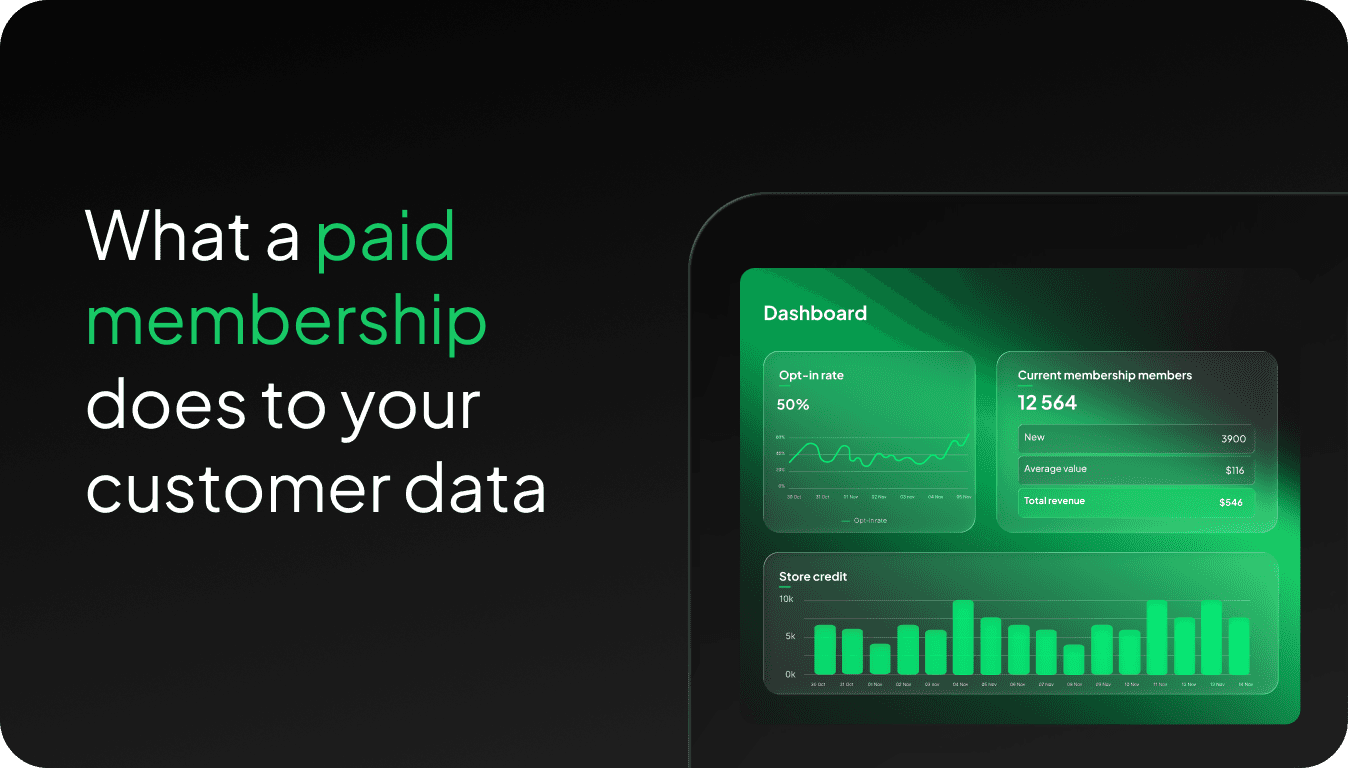
Most brands think of membership as a revenue model. It is also the most powerful customer intelligence system you can build.
The Problem With One-Time Purchase Data
Most DTC brands are making retention decisions based on incomplete signals. A customer buys once. They get a welcome email, a post-purchase flow, maybe a win-back sequence sixty days later. If they do not return, the brand knows almost nothing about why.
This is not a personalization problem. It is a data structure problem. One-time purchases do not generate the behavioral trail needed to understand what a customer actually values, when they are most likely to return, or what would pull them back into a purchase cycle.
A paid membership changes this at the root.
What Members Tell You That Buyers Cannot
When a customer becomes a paying member and returns month after month to spend their credit, they generate a behavioral record that is qualitatively different from what a single purchase produces.
A member visit tells you when they return relative to their billing cycle. It tells you which products they choose when they have the freedom of store credit. It tells you whether they buy only what they intended to buy or whether they explore categories they have never touched. It tells you how much they spend beyond the credit they arrived with.
Over six months, this builds into a profile with real predictive power. A member who consistently redeems within seventy-two hours of their billing date is behaving differently from a member who waits three weeks. A member who always returns to a single SKU is behaving differently from one who explores new categories with each visit.
McKinsey's research on subscription commerce identifies behavioral personalization as one of the primary differentiators between subscription programs that retain well and those that churn out. Brands that use behavioral signals from recurring customers to personalize communication and offer timing see measurably better outcomes than brands sending the same messages to everyone on the same schedule.
The Specific Signals That Matter Most
Credit usage cadence is the most valuable signal in a membership program. How quickly does the member spend their credit after it refreshes? Members who spend within the first seventy-two hours of billing tend to have the highest retention rates. Members who let credit accumulate for more than thirty days are at elevated churn risk.
Category exploration tells you whether the membership is driving discovery. Subscribfy data across active brands shows that members who try products outside their initial purchase category have significantly higher twelve-month retention rates than members who buy only the same single SKU. The credit creates the conditions for exploration. The data tells you whether that exploration is happening.
Spend beyond credit is a direct measure of membership-driven AOV lift. A member who consistently spends $20 more than their monthly credit is demonstrating a behavioral pattern that a loyalty points program rarely produces, because they are not waiting for a reward. They came to spend what is theirs and decided to spend more.
How to Use This Data
Shopify's guidance on customer lifetime value identifies purchase frequency as the most impactful driver of LTV growth. Membership data tells you exactly which members are increasing their frequency over time and which ones are plateauing. That distinction lets you intervene specifically: a targeted offer for members whose visit cadence has slowed, a milestone reward timed to their peak engagement window, a category recommendation based on what they have already bought.
Shopify's research on repeat customer behavior shows that repeat customers convert at substantially higher rates than new visitors, but only when they feel the brand understands what they want. Membership data makes that understanding operationally possible. You are not inferring what returning customers value. You are reading it from their actual behavior over multiple return visits.
The Compounding Advantage
The longer a member stays, the richer the data becomes. A member in month twelve is generating behavioral signals that a member in month two cannot. The longer your membership program runs, the better your ability to predict churn risk, identify upgrade candidates, and design perks that actually match what your best customers want.
This is one of the least-discussed advantages of a paid membership program over a points-only loyalty program. Loyalty programs track transactions. Membership programs track relationships. The data that comes out of a relationship is categorically more useful for building retention.
Turn Member Behavior Into Retention Intelligence
Subscribfy surfaces membership data, credit usage patterns, cohort LTV curves, opt-in rates, and churn signals in a single dashboard. The platform is built to translate member behavior into specific intervention points. If you want to understand what your best customers are telling you, that is where you start.

Book a meeting with our sales team now!
Create predictable revenue from the customers you already have.