The Chargeback You Just Lost Wasn't Fraud. It Was a Customer Who Forgot.
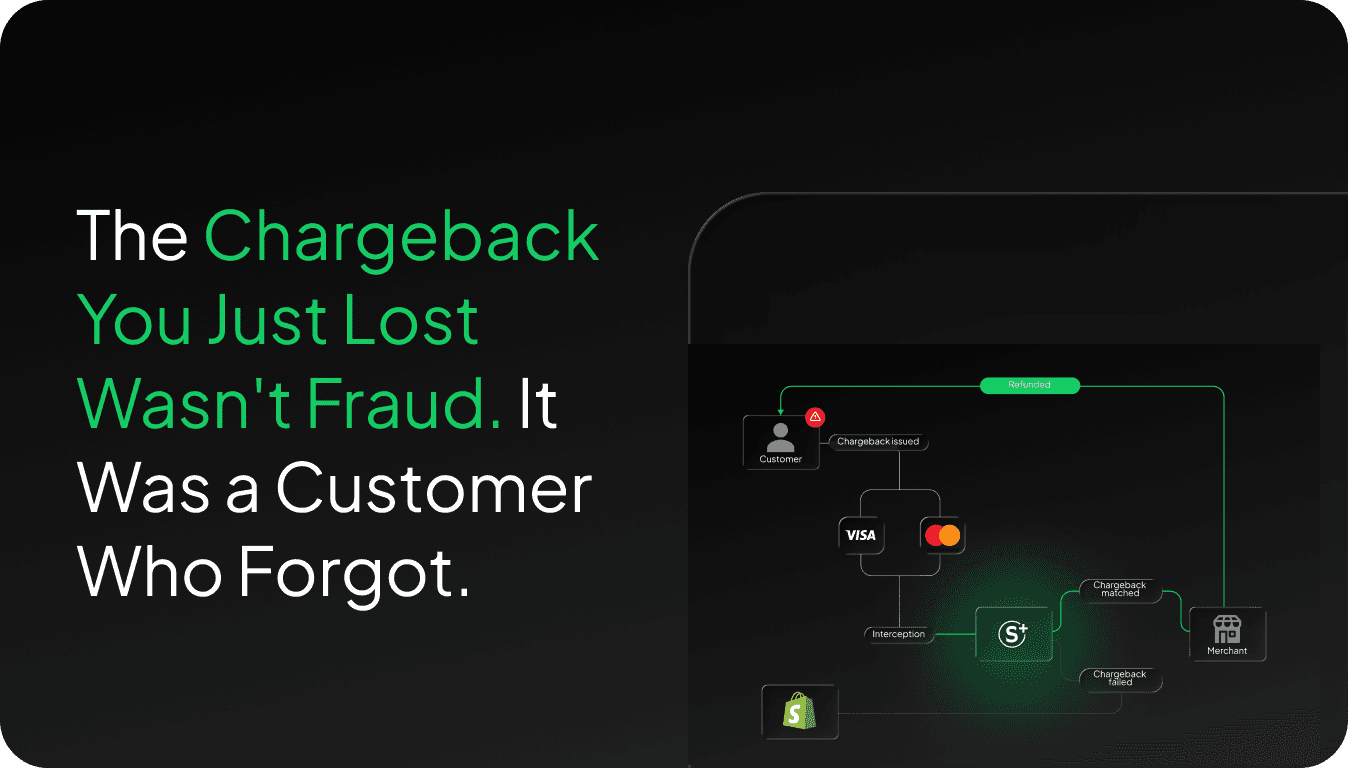
Most disputes on a recurring charge aren't theft. They're a customer who didn't recognize their own bill, and Visa and Mastercard both say it's getting worse.
A customer disputes a charge, the bank sides with them, and the money leaves the account before anyone on the merchant side even sees the case. On paper this looks like fraud. In a growing share of cases on recurring and membership charges, it isn't. Friendly fraud is what happens when a cardholder disputes a transaction they actually authorized, often because they forgot the subscription existed or didn't recognize the name on their statement. Visa and Mastercard both treat this as a distinct, growing category of dispute, separate from stolen card numbers, and recurring billing sits squarely in the part of the business it hits hardest.
Why Recurring Billing Is the Most Exposed Model in Ecommerce
Visa's own research on friendly fraud lists recurring billing models by name as one of the categories most exposed to this problem, specifically because customers forget about renewals and dispute charges that were entirely legitimate. The same research notes that friendly fraud represents around 20 percent of all fraudulent disputes globally, and as much as 30 percent for high volume online merchants. A one time purchase only has to survive one moment of customer memory. A membership has to survive that moment every single billing cycle, for as long as the relationship lasts, which is exactly why the exposure compounds instead of staying flat.
Mastercard's reporting on first party misuse puts a sharper number on the subscription category specifically, citing a 2020 merchant survey that found 75 percent of disputes on subscriptions and digital goods were first party misuse rather than genuine theft. That is not a rounding error. It means the large majority of chargebacks a membership brand sees were never really fraud cases to begin with, which also means a fraud filter built to catch stolen cards is solving the wrong problem for most of what actually lands in the dispute queue.
What Actually Causes a Customer to Dispute Instead of Contact Support
The cardholder almost never wakes up intending to commit fraud. Visa's own breakdown of how friendly fraud happens lists the same handful of triggers over and over: a billing descriptor that doesn't match the brand name the customer remembers, a renewal that arrives without warning, or a cancellation request the customer believed had gone through. Each of these is a communication failure before it is a fraud event. The customer's path of least resistance is not calling support and explaining themselves. It is tapping a dispute button inside their banking app, which costs them nothing and usually gets their money back within days.
This is the part that is easy to miss. A merchant that makes cancellation hard, buries the billing descriptor in something unrecognizable, or stays silent between renewals is not protecting revenue. It is manufacturing the exact conditions Visa and Mastercard both describe as the leading causes of first party misuse.
How a Dispute Network Connection Changes the Outcome
Visa's friendly fraud guidance is direct about what actually works once a dispute is already in motion: structured, verifiable evidence submitted directly through the network, not a generic email reply. Visa's own Compelling Evidence framework lets a merchant validate a disputed transaction using prior undisputed purchases from the same device or account, and Visa reports that close to 90 percent of enterprise merchants are already using this kind of evidence to challenge invalid disputes rather than simply absorbing the loss. Mastercard's equivalent program works on a similar principle, giving merchants a channel to share transaction history directly with the card networks before a dispute even escalates, rather than relying on a blacklist after the fact.
For a membership or subscription brand, this matters more than it does for a single purchase retailer, because the same customer relationship generates evidence every single month. A clean renewal history, a recognizable billing descriptor, and a documented cancellation flow are not just good practice. They are the exact compelling evidence a dispute network needs to rule in the merchant's favor before the chargeback ever reaches a human reviewer.
Why This Problem Grows With the Subscription Model Itself
Grand View Research estimates the global subscription economy was worth approximately 492 billion dollars in 2024 and is on track to approach 1.5 trillion dollars by 2033. Every one of those recurring relationships carries the same structural exposure Visa and Mastercard describe, a charge that has to be recognized and accepted not once, but on a schedule, indefinitely. As more revenue shifts onto that model, the share of disputes driven by forgotten or unrecognized renewals will not shrink on its own. It will keep growing alongside the model that created it, unless the underlying billing communication and evidence trail get built deliberately.
What This Means for Your Chargeback Strategy
Treat a clear billing descriptor as a fraud prevention tool, not a branding detail. Most disputes start with a customer who genuinely didn't recognize the charge on their statement.
Send a renewal notice before every charge, especially on quarterly or annual cycles where memory fades the most between charges.
Make cancellation visible and easy to find. A customer who can't locate the cancel button disputes the next charge instead.
Build the evidence trail before the dispute, not during it. Renewal history, login activity, and device data only help if they already exist when a chargeback arrives.
Treat the dispute network connection as infrastructure, not a fallback. The brands winning these cases are submitting structured evidence directly through Visa and Mastercard's own
None of this requires guessing which disputes are real and which aren't. Subscribfy connects directly into Visa and Mastercard's dispute networks and builds the renewal, cancellation, and billing trail automatically inside the membership itself, so the evidence already exists by the time a customer's bank ever asks for it.

Book a meeting with our sales team now!
Create predictable revenue from the customers you already have.