Shopify Chargebacks: Why Recurring Revenue Brands Get Hit Hardest
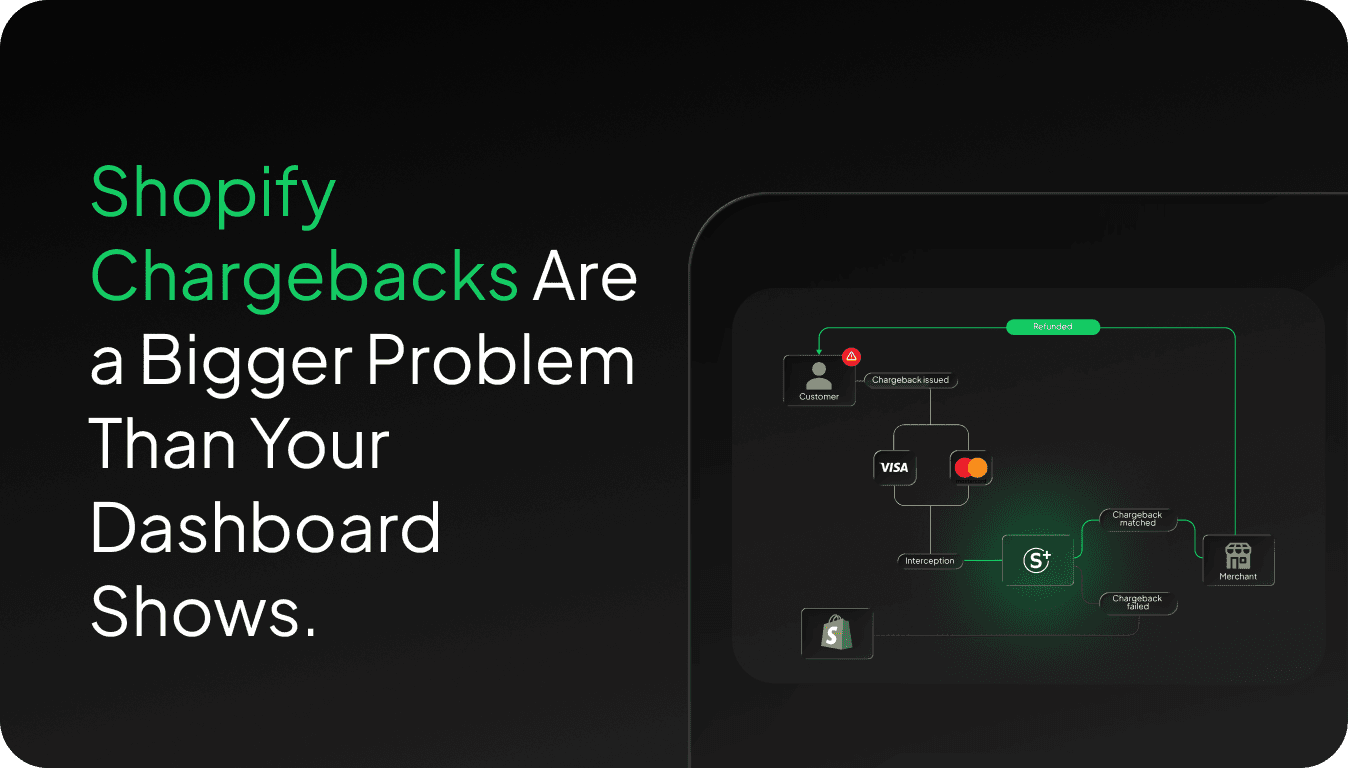
Shopify chargebacks cost more than the original transaction. Here is why recurring revenue brands face the highest exposure and how to stop disputes before they land.
Shopify Chargebacks Are a Bigger Problem Than Your Dashboard Shows
Most Shopify merchants look at their chargeback rate and see a small number. Under one percent feels manageable and does not feel like a strategic threat. That framing is wrong, and it costs brands more than they realize.
A chargeback is not just a reversed transaction. According to Visa, losses from a disputed transaction can reach up to double the original transaction amount once fees, operational costs, and processing penalties are factored in. The number on your dashboard is showing you the tip of the problem, not the full cost, and for brands running memberships and recurring billing, the exposure is structurally higher than it is for stores processing one-time transactions.
Why Recurring Revenue Models Carry Specific Risk
A one-time purchase chargeback is frustrating but relatively contained. A recurring billing chargeback is a different kind of problem entirely. When a customer disputes a recurring charge, the issuing bank places a payment block on your account for that customer, which means that even if you win the dispute and even if the charge was completely legitimate, that customer cannot easily resubscribe. The relationship is severed at the payment infrastructure level, not just at the customer experience level.
Mastercard’s own data shows that a quarter of all Mastercard chargebacks are driven by recurring transactions, where customers are trying to cancel a subscription or simply do not remember the charge. These are not bad actors in most cases. They are customers who would have stayed in your membership program if someone had reached them before they called their bank.
This is the core issue with recurring billing chargebacks: they are often a retention failure that becomes a payment failure. The customer did not understand the charge, forgot they had signed up, or could not find a straightforward way to cancel, so instead of contacting your team they went to their card issuer. By the time it appears in your dashboard, the relationship is already over and the fee is already charged.
The Friendly Fraud Problem Is Larger Than Most Brands Admit
Friendly fraud is the term for a chargeback filed by a customer on a transaction that was entirely legitimate. The purchase happened, the product or service was delivered, and the customer disputes it anyway. It happens for a range of reasons: genuine confusion about the charge description, a household member who did not recognize the transaction, buyer’s remorse, or in some cases deliberate abuse of the chargeback process.
Visa’s research identifies recurring billing models as one of the highest-risk categories for friendly fraud specifically because customers can forget renewals and dispute legitimate charges without any intent to defraud. Estimates put friendly fraud at between 40% and 80% of all ecommerce fraud losses, and for brands running memberships the dynamic is particularly sharp. A member who joined six months ago may not recognize the charge description when it appears on their bank statement. A member whose payment method was used by another household member will dispute it without hesitation. A member who wanted to cancel but could not easily find the portal will go to their bank instead of your support team. In each of those cases the charge was legitimate, but the dispute is still a chargeback and you still pay.
What Interception Changes
The standard chargeback process works like this: a customer files a dispute, the bank processes it, you receive a notification, you assemble evidence, and then you either fight the case or absorb the loss. By the time you are involved, the fee has already been charged.
Interception works differently. Visa’s Dispute Prevention program and Mastercard Alerts work with merchant systems to flag disputes before they become formal chargebacks. When a dispute is initiated on an eligible transaction, it pauses in the network’s system and the merchant is notified, giving them the option to issue a refund that cancels the dispute entirely and prevents it from registering against their account. A refunded pre-dispute does not count against your chargeback rate, does not incur the same fees, and preserves the possibility that the customer returns. A formal chargeback does all of those things in the wrong direction.
Subscribfy’s Chargeback Prevention works directly with Visa and Mastercard to intercept disputes at this pre-dispute stage. The system intercepts approximately 95% of chargebacks before they reach your Shopify account, with 90% accuracy on matching disputes to the correct orders. Merchants can set automated refund rules for disputes below a defined threshold or manually review each case, and the dashboard tracks chargeback rate by month, Visa and Mastercard dispute percentages, and overall performance metrics in real time with Slack alerts so operators see issues as they arise rather than after processing.
Why Your Chargeback Rate Affects More Than Your Fee Line
Visa and Mastercard operate monitoring programs that flag merchants whose chargeback rates exceed defined thresholds. Once flagged, merchants enter programs that carry additional monthly fees and require remediation plans, and if rates continue above threshold the consequences can escalate to suspension of card processing entirely. For a Shopify brand running memberships with thousands of active recurring billing relationships, this risk is not hypothetical. As your member base grows, the absolute number of potential disputes grows with it, and a chargeback rate that is manageable at 500 members may become a serious processor relationship risk at 5,000.
There is also a less visible operational cost: every disputed recurring charge represents a member who will not return. Proactive interception does not just protect the fee line. It preserves the customer relationship by resolving the confusion before it becomes adversarial. A member who receives a pre-dispute refund and a clear explanation of the charge is a recoverable customer. A member who filed a formal chargeback and had their card blocked is not.
Prevention Starts Before the Dispute
The most effective chargeback prevention for recurring billing is not winning disputes after they are filed. It is eliminating the conditions that produce them in the first place. If the charge on a customer’s statement reads as an unfamiliar string of characters rather than your brand name, confusion chargebacks will follow. Pre-billing notifications that tell members the date and amount of their next charge, sent before it processes, reduce dispute rates meaningfully. A clear and easy-to-find cancellation path means customers who want to leave will cancel rather than dispute.
These practices reduce the volume of disputes that need to be intercepted, and the interception layer handles what slips through. Together they create the conditions for a chargeback rate that trends down as your member base grows rather than one that compounds your cost structure as recurring revenue scales.
Subscribfy’s chargeback prevention is natively integrated into the Shopify ecosystem alongside its membership, subscription, loyalty, and wallet pass infrastructure. Managing it from the same platform as the programs generating the recurring revenue means disputes are matched to the right orders accurately, and the team managing retention is also watching the dispute dashboard. If you are building a recurring revenue base and want to protect it from the inside, Subscribfy’s chargeback prevention runs alongside your membership program from day one.

Book a meeting with our sales team now!
Create predictable revenue from the customers you already have.