Shopify Chargeback Reddit: What Merchants Actually Learn
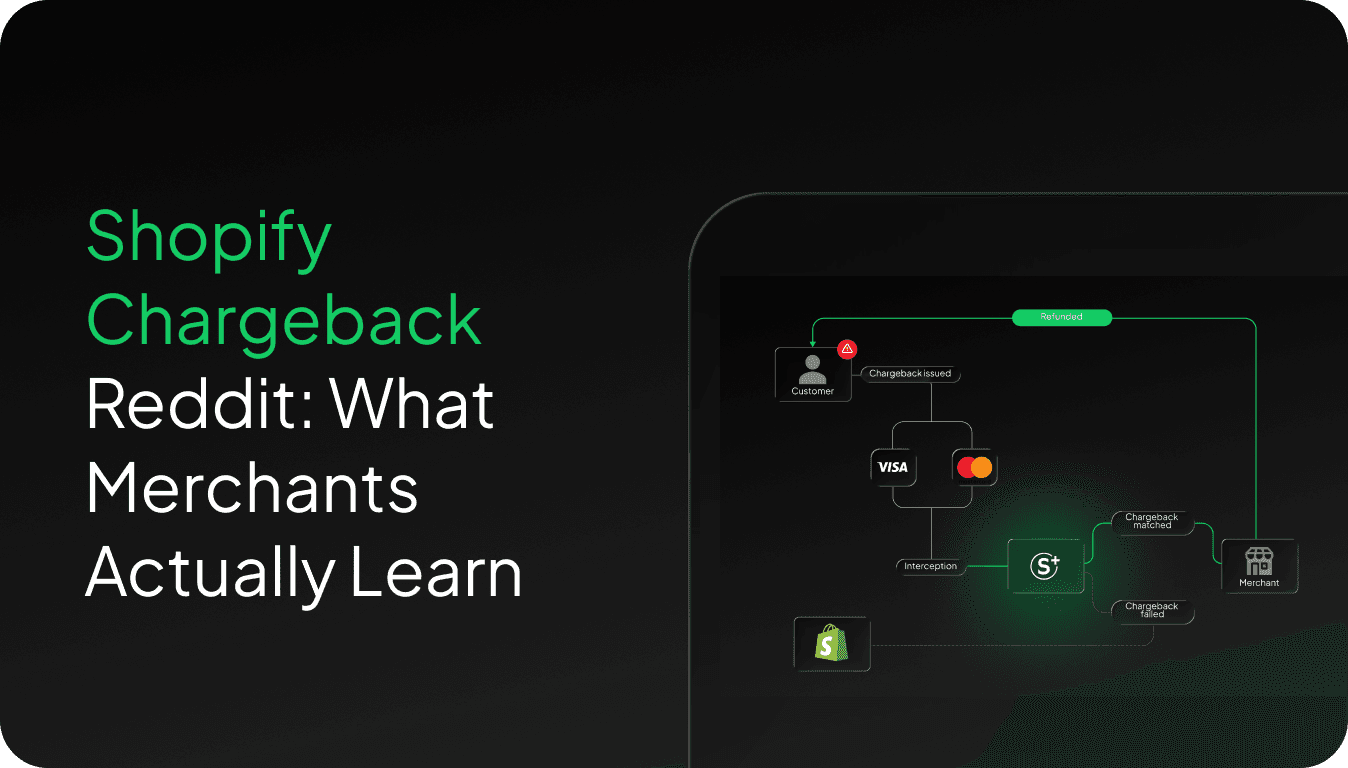
he most honest advice about Shopify chargebacks doesn't come from help docs. It comes from merchants who've already lost money and came back to warn you.
What Reddit Threads About Shopify Chargebacks Actually Teach You
Every few weeks, a post blows up on r/shopify. A merchant lost $400. Or $4,000. Sometimes more. The chargeback came in weeks after the order shipped, the customer claimed they never received the item, and Shopify sided with the bank. The merchant is out the product AND the money.
The comments pile up fast. And if you read enough of them, patterns emerge.
This guide pulls those patterns together: what merchants learn the hard way about Shopify chargebacks, and what the documentation won't tell you upfront.
The #1 Misconception Merchants Have Going In
Most merchants assume chargebacks are rare edge cases. They're not.
Chargebacks are a persistent operational cost for any brand doing real volume. Research from Javelin Strategy & Research, commissioned by Mastercard, found that consumers go directly to their bank in 75% of disputes rather than contacting the merchant first, and friendly fraud, where a customer disputes a legitimate charge, is consistently estimated at roughly 60-80% of total ecommerce chargebacks across industry studies.
Reddit confirms this constantly. The most common comment in chargeback threads: "I had no idea this was this common until it happened to me."
The second most common comment: "I wish I'd set up prevention before it happened."
What Reddit Merchants Get Wrong When They Fight Chargebacks
Fighting a chargeback manually is exhausting and often pointless. Here's what merchants report:
They submit incomplete evidence. Banks don't care about your customer service emails. They want order confirmation, tracking data with delivery confirmation, IP addresses, signed terms of service at checkout. Most merchants don't have all of this ready in one place.
They wait too long. Chargeback response windows are short, typically 7 to 21 days depending on the card network and issuing bank. Merchants who post on Reddit about "losing a dispute I should have won" almost always missed a deadline or submitted on day 18 of a 20-day window.
They fight the wrong chargebacks. Some disputes are genuinely unwinnable. A merchant spending 3 hours assembling evidence for a $30 order is making a poor business decision. The math on time vs. recovery doesn't work.
They don't realize the threshold risk. This is the one that surprises merchants most. Visa and Mastercard set chargeback ratio thresholds. If your dispute rate crosses 1%, you're in monitoring territory. Cross it consistently and you lose the ability to accept those cards entirely. Several Reddit threads feature merchants who got there without realizing it.
The "Friendly Fraud" Problem Nobody Warns You About
Reddit has a dark but honest corner of chargeback discussions: customers who know exactly what they're doing.
A customer places an order. Item arrives. They dispute it anyway, claiming non-delivery. They get their money back. They keep the product. The merchant gets charged a dispute fee on top of losing the revenue.
This is called friendly fraud, and multiple industry fraud surveys have documented its rise alongside e-commerce growth. It's particularly common in beauty, fashion, electronics, and jewelry, high-perceived-value categories where the "it never arrived" claim is easy to make.
Merchants on Reddit report the same profile repeatedly: customer with a history of orders, no complaints until the dispute, often with a delivery confirmation on record. The bank still sides with the cardholder more often than not.
The solution isn't better evidence. It's early interception, catching the dispute before it becomes a formal chargeback.
What Actually Works (According to People Who've Fixed It)
Reddit threads that go beyond venting and into solutions converge on a few consistent answers.
Dispute interception before escalation. Visa and Mastercard run alert programs, Verifi and Ethoca, that notify merchants when a customer contacts their bank, before the dispute is formally filed. If you get that alert and refund proactively, the chargeback never gets filed. Your ratio stays clean. Several merchants in threads describe this as "the thing I wish I'd known on day one."
Consistent fulfillment documentation. Every high-risk order should have tracking with signature confirmation. Screenshot the delivery confirmation. Log the customer's IP at checkout. Keep everything in one place, not scattered across 4 tools.
Post-purchase communication. A significant portion of chargebacks come from customers who simply couldn't get a response. They contacted support, heard nothing, and called their bank. Fast post-purchase communication, especially around shipping delays, kills a large percentage of dispute triggers before they start.
Know your numbers. Most merchants who get flagged by card networks didn't see it coming because they weren't watching their chargeback ratio weekly. Track it consistently. Leading indicators matter more than lagging ones here, the same principle that applies to churn and retention metrics generally.
Why Shopify's Built-In Tools Aren't Enough on Their Own
Shopify has dispute management built into the admin. It's useful for tracking and submitting responses. It is not a prevention tool.
By the time a chargeback appears in your Shopify admin, the dispute is already filed. You're in response mode, not prevention mode. Interception, catching the dispute before it's formally filed, consistently beats fighting it after the fact, in both cost and success rate.
This is why merchants who go from "reactive" to "proactive" on chargebacks see their ratio drop fast. Not because they got better at fighting. Because they stopped most disputes from becoming chargebacks at all.
The Solution Reddit Keeps Pointing Toward
The merchants who report solving their chargeback problem, not just managing it, almost universally describe some form of alert-based interception.
Subscribfy's chargeback prevention product works exactly this way. When a customer contacts their bank, Subscribfy receives a real-time alert, matches it to the order in Shopify, and automates a refund before the dispute escalates. The chargeback never gets filed. Your ratio stays below threshold. You pay $19 per matched alert, only for alerts that are successfully intercepted.
The 95% interception rate is Visa and Mastercard certified. Every matched alert is visible inside Shopify with full resolution tracking, so you know exactly which orders were saved and how.
For merchants doing volume in categories where friendly fraud runs high (beauty, jewelry, skincare, fashion), this isn't optional infrastructure. It's cost of doing business.
FAQ: What Reddit Merchants Ask Most
How long do I have to respond to a Shopify chargeback? Response windows vary by card network and issuing bank. Typically 7 to 20 days. Treat every dispute as urgent from day one.
Does Shopify help you win chargebacks? Shopify provides a dispute management interface and can submit evidence on your behalf. But winning depends on the quality of your documentation and the reason code. They are not an advocate. They're a neutral platform.
What evidence actually wins a chargeback dispute? Delivery confirmation with tracking, IP address at checkout, signed terms of service, communication logs showing the customer was notified. Subjective evidence (screenshots of a nice email exchange) rarely moves the needle.
Can I get my Shopify account suspended for too many chargebacks? Shopify itself tracks your chargeback rate and may flag accounts with high dispute rates. More critically, Visa and Mastercard operate their own monitoring programs with consequences that go beyond Shopify, including losing the ability to accept those cards.
What's the difference between a chargeback and a refund? A refund is initiated by you. A chargeback is initiated by the customer's bank. Chargebacks cost you the revenue, a dispute fee (typically $15-35), and count against your chargeback ratio. Refunds cost you only the revenue.
The merchants who stop losing to chargebacks aren't the ones who get better at writing dispute responses. They're the ones who build a system that intercepts the problem before it costs them anything.

Book a meeting with our sales team now!
Create predictable revenue from the customers you already have.