SHOPIFY CHARGEBACK RATE: COMPLETE 2026 GUIDE TO PREVENTION
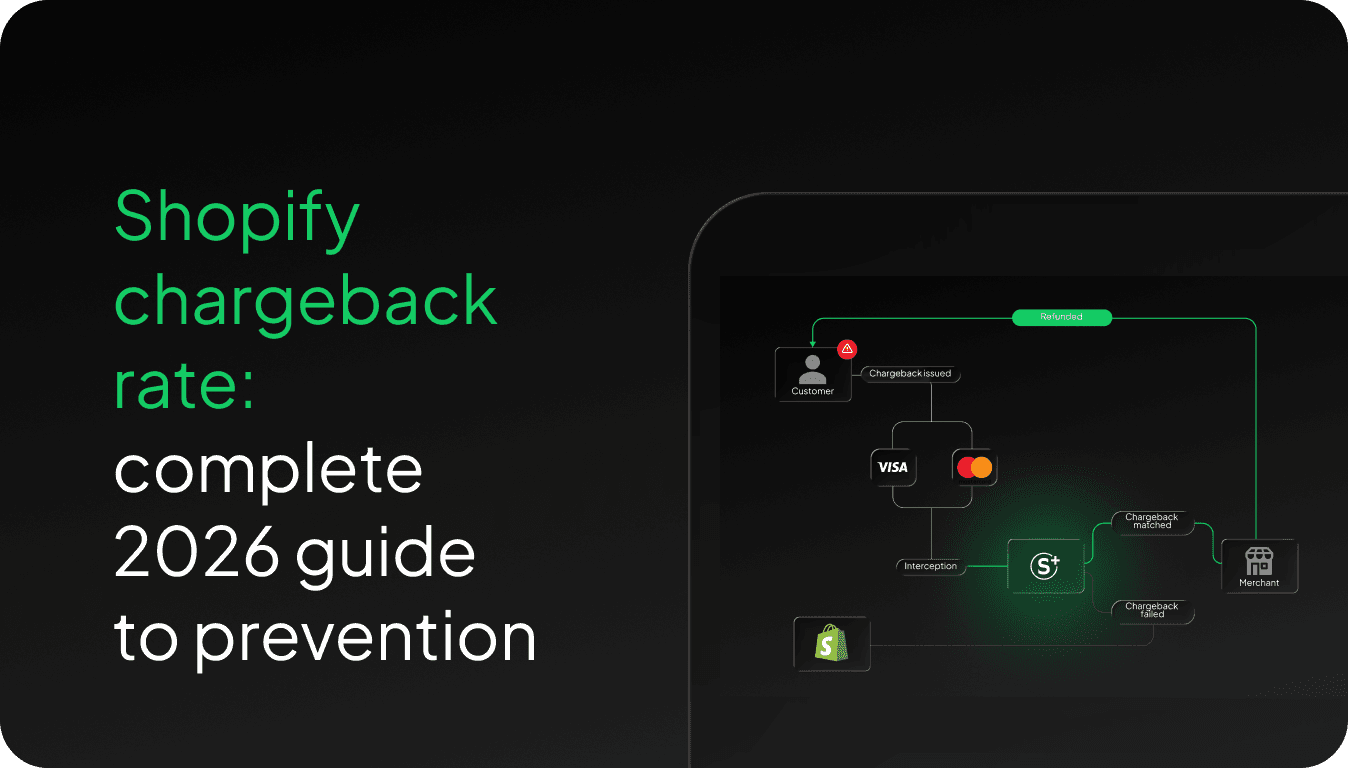
Everything you need to know about chargeback rates on Shopify, from industry benchmarks to proven prevention strategies that actually work.
Your chargeback rate is the percentage of transactions that customers dispute through their bank instead of contacting you directly. On Shopify, this metric can make or break your business.
Here's why: payment processors like Stripe and PayPal monitor your chargeback rate constantly. Cross certain thresholds, and they'll freeze your account, hold your funds, or terminate your merchant services entirely.
What Is a Good Chargeback Rate for Shopify Stores?
The average chargeback rate across all industries is 0.60%. Here's what you need to know by risk tier:
Low-risk industries: 0.3% or lower
Medium-risk industries: 0.5–0.9%
High-risk industries: up to 1.5%
Whether you're in a high-risk sector like subscriptions or a low-risk space like SaaS, payment processors have been clear: keep your ratio safely under 1%, ideally closer to 0.5%.
The card networks set the hard thresholds. Visa's chargeback monitoring program kicks in at 0.9%. Mastercard's excessive chargeback program starts at 1.5%. Hit these numbers, and you'll face additional fees, monitoring requirements, and potential account closure.
How to Calculate Your Shopify Chargeback Rate
The formula is straightforward:
Chargeback Rate = (Total Chargebacks ÷ Total Transactions) × 100
There's a catch. Different payment processors calculate this differently. Some use a rolling 30-day window. Others use monthly snapshots. Card networks use their own rolling periods.
Check your Shopify payments dashboard regularly. Navigate to Analytics > Finances > Chargebacks to see your current rate. Most merchants are surprised by what they find.
Why Shopify Stores Get High Chargeback Rates
The most common culprits:
Friendly fraud. Customers buy something, receive it, then claim they never authorized the purchase. Friendly fraud accounts for 61% of disputes. It is the dominant driver of elevated chargeback rates.
Poor customer service. When customers can't reach you, they call their bank instead. A $50 disputed charge becomes a $50 chargeback plus fees on top.
Confusing billing descriptors. Your business name on customer credit card statements doesn't match your store name. Customers don't recognize the charge and dispute it.
Subscription confusion. Customers forget about recurring charges or don't understand your billing cycle. Subscription businesses face unique chargeback challenges.
Delivery issues. Package delays, wrong addresses, or items not matching the description trigger disputes.
Prevention Strategies That Actually Work
1. Use Clear Billing Descriptors
Your billing descriptor should match your store name exactly. If your Shopify store is "BestSkincare" but your billing descriptor says "BSC Holdings LLC," you're asking for trouble.
Contact your payment processor to update this immediately. It's the single fastest way to reduce chargebacks.
2. Implement Chargeback Alerts
Chargeback alerts notify you the moment a dispute is filed, giving you 24–72 hours to issue a refund before it becomes an official chargeback. Resolving it at this stage means it does not count against your chargeback rate.
Subscribfy's chargeback prevention intercepts disputes at this stage. You pay $19 per alert, but save the chargeback fee plus the revenue loss.
3. Optimize Your Customer Service
Make it easier to reach you than to call the bank. Add multiple contact methods: email, phone, live chat, and a prominent contact page.
Respond to customer inquiries within 2–4 hours. Research from Shopify on customer retention confirms that fast resolution is one of the strongest drivers of repeat purchase behavior.
4. Use Address Verification (AVS) and CVV Checks
Enable these fraud filters in your Shopify payments settings. They catch a significant share of fraudulent transactions before they process.
You may decline some legitimate orders. The chargeback savings usually outweigh the lost sales.
5. Document Everything
For high-value orders, require signature confirmation for delivery. Save all customer communications. Photograph packaged items before shipping.
When you dispute a chargeback, strong evidence determines the outcome.
How to Fight Chargebacks on Shopify
Not all chargebacks are worth fighting. You need to understand when to dispute and when to accept.
Fight chargebacks when you have:
Proof of delivery with signature
Clear evidence the customer received and used the product
Documentation showing the customer understood the purchase terms
Don't fight when:
You clearly made a mistake
The product was defective
You cannot prove delivery
Merchants win on average about one-third of the disputes they contest. For suspected friendly fraud cases, the win rate rises to roughly 44%, but drops to just 9% when true fraud is involved. Factor in the time investment and decide accordingly.
Subscription-Specific Chargeback Issues
Subscription businesses face unique challenges. Customers forget about recurring charges or don't understand cancellation policies.
Best practices for subscription chargebacks:
Send pre-billing notifications. Email customers 3–5 days before each charge.
Make cancellation easy. Don't hide the cancel button or require phone calls.
Use dunning management. For failed payments, retry charges with adjusted timing instead of canceling immediately.
Offer flexible pause options. Let customers pause subscriptions instead of canceling outright.
Monitoring Tools and Alerts
Set up monitoring beyond Shopify's basic reporting:
Weekly chargeback rate calculations
Payment processor threshold alerts
Customer service ticket volume tracking
Failed payment retry monitoring
Most payment processors offer webhook notifications for new chargebacks. Set these up to get real-time alerts.
When Your Rate Gets Too High
If your chargeback rate crosses 1%, take immediate action:
Stop all advertising spend temporarily
Review and tighten your fraud filters
Contact your payment processor to discuss your account status
Implement emergency chargeback prevention measures
Consider switching to a high-risk payment processor
Recovery typically takes 3–6 months of disciplined prevention.
The Business Impact
High chargeback rates don't just trigger payment processor issues. They indicate deeper problems with customer lifetime value and operational efficiency.
Brands with chargeback rates under 0.5% typically have stronger customer relationships, better operational processes, higher profit margins, and more predictable cash flow.
Your chargeback rate is a symptom. Fix the underlying issues, and you'll see improvement across multiple business metrics.
The most successful Shopify brands treat chargeback prevention as part of their broader customer retention strategy. When customers feel valued and supported, they resolve issues directly instead of disputing charges. That's why platforms like Subscribfy focus on building stronger customer relationships through membership programs and proactive communication. Customers who feel connected to your brand don't file chargebacks.

Book a meeting with our sales team now!
Create predictable revenue from the customers you already have.