Membership Programs Built Around Products Miss What Retains People
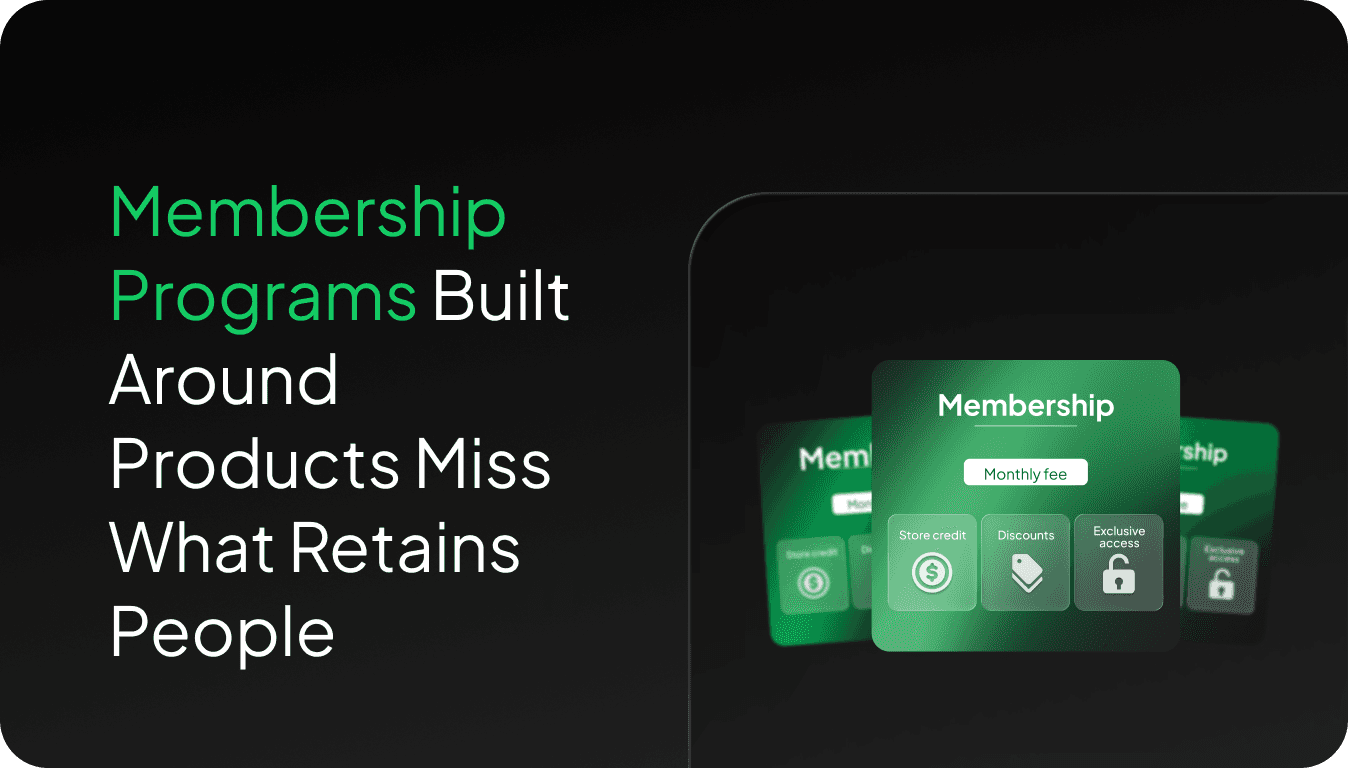
Most DTC brands position their membership around the products in their catalog. The members who stay longest are retained by something else, and most programs have never identified what that is for their specific audience.
The standard Shopify Plus membership pitch describes the product. The credit applies to orders from the catalog. The discount reduces the price of items the member was already considering. The early access unlocks the same products before the general public. Every perk is product-adjacent, and every benefit is denominated in purchasing power.
That model works for acquisition because it is legible. A prospective member can immediately calculate whether the credit justifies the fee based on how often they plan to order. The value proposition is explicit and the math is visible.
It is a less effective model for retention because it anchors the entire membership to the member's ongoing purchase frequency. A month when the member does not need to order is a month when the membership delivered nothing. A season when the category is out of rotation for that member is a season the program goes unused. And a used program, as the research on cancellation consistently shows, is one of the most vulnerable programs in the database.
The Research on What Actually Drives Long-Term Retention Points Away from Products
Propello Cloud's 2025 Loyalty Uncovered Report, drawing on responses from enterprise-level loyalty program operators, found that trust, affinity, and attachment are the three core drivers of emotional loyalty, and that 84% of brands are investing in personalization as their top retention priority because transactional rewards alone are insufficient to hold members over time. The report explicitly distinguishes between programs that use discounts as an acquisition gateway and programs that build emotional connection as the retention mechanism.
Product perks sit firmly in the first category. They acquire members by reducing the price of something those members were already interested in. They do not, by themselves, build the affinity and attachment that produce long-term retention.
The brands achieving the highest renewal rates are those where the membership delivers something beyond pricing power. Access to expertise, recognition as a valued customer, a sense of belonging to a group of people who share an interest in the same category. These are not product perks. They are relationship perks, and they produce different retention behavior because they cannot be exhausted by a period of not ordering.
A Member Who Has Not Ordered Recently Can Still Be an Engaged Member
A product-only membership has a binary active state: the member is ordering or they are not. A member who has not ordered in six weeks is a member who has received no value from the program in six weeks, which builds the cancellation argument with every passing billing cycle.
A membership that includes a community layer, expertise access, or recognition cadence can deliver value to a member who is not currently in an ordering cycle. A member who reads the brand's member-only content, participates in a product feedback session, or simply feels they belong to something specific does not need to order this week to feel the membership is worth the fee.
Research from DAC Group on the redefinition of brand loyalty in 2025 found that holistic loyalty is built on emotional connection, shared values, and seamless experiences across touchpoints, rather than on transactions. Loyalty is the sum of all interactions, not just the purchasing ones. A membership designed only around purchasing moments is missing the majority of a member's experience of the brand.
What a Non-Product Membership Perk Looks Like in Practice
Non-product perks do not require elaborate infrastructure. A monthly email sent only to members that shares genuine behind-the-scenes content about how a product is made, a quarterly video update from the founder that is not available on the general marketing channels, or a member-only chat thread where questions get answered by someone who actually knows the products are all non-product perks. They cost almost nothing to produce and they deliver value independent of whether the member places an order that month.
The test for whether a perk is a relationship perk or a product perk is simple. Does it deliver value to a member who does not buy anything this cycle? If the answer is no, the perk is product-adjacent and the program's retention is contingent on purchase frequency. If the answer is yes, the perk is building a relationship that persists through quiet purchasing periods.
Subscribfy's own merchant data shows members returning 59% more often than non-members. That frequency lift depends on members maintaining a relationship with the brand during periods between orders, not solely on members being incentivized to order more often. A membership that delivers value beyond the purchase moment is building the relational foundation that return frequency depends on.
If your membership's entire value proposition disappears for a member who does not order this month, the program has no mechanism for retaining members during the behavioral gaps that affect every customer at some point.
Subscribfy helps Shopify Plus brands build membership value that persists between orders rather than only activating at the checkout. See how at subscribfy.ai.

Book a meeting with our sales team now!
Create predictable revenue from the customers you already have.