Bold Memberships on Shopify: Still Worth It in 2026?
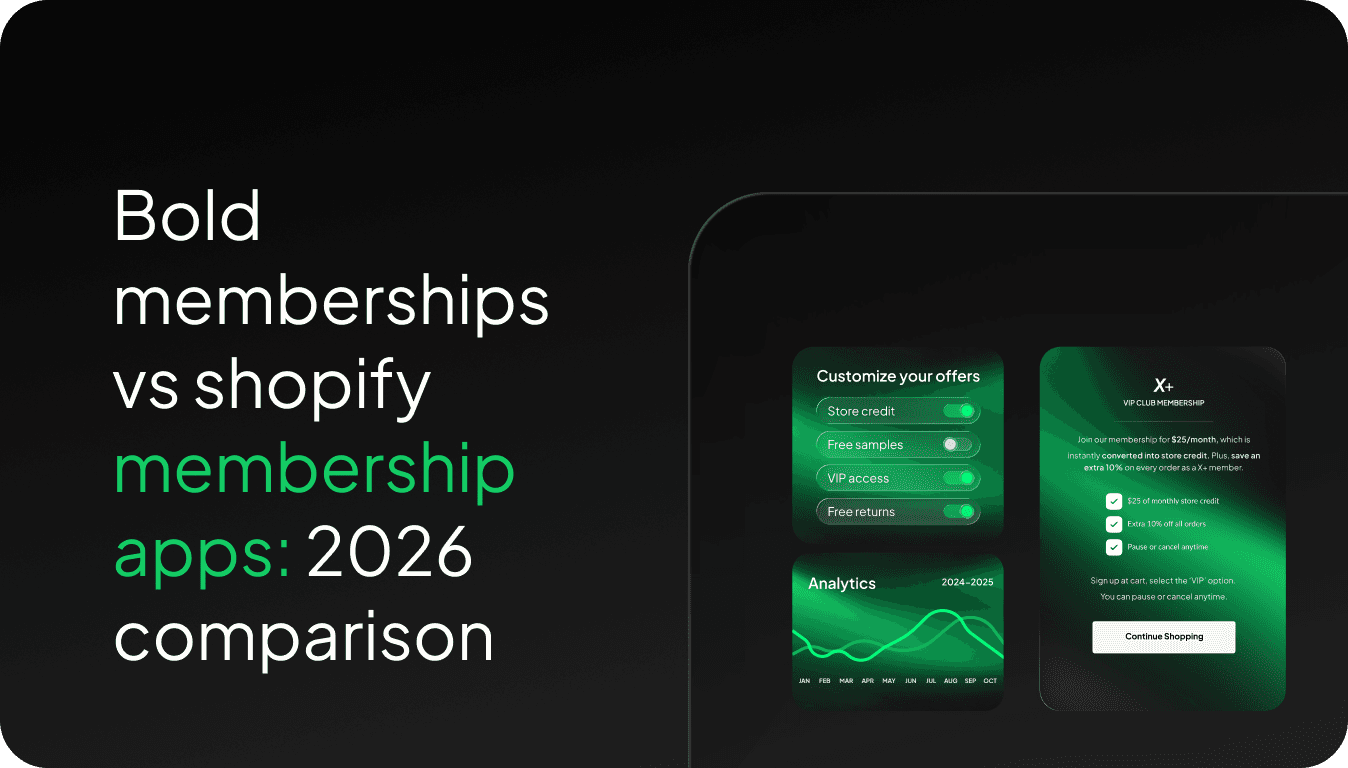
What Bold Memberships does well, where it stops, and when a store-credit membership is the better fit for a growing Shopify brand.
Bold Memberships is a Shopify app that charges customers a recurring fee and gives them access to membership plans, member-only products and member rewards. For a simple program, that is still enough. For a brand that wants membership to become a real share of revenue, the question is different.
What is Bold Memberships?
Bold Memberships is a Shopify app from Bold Commerce for selling recurring membership plans, with tiers, members-only products and loyalty rewards for members. Its Shopify App Store listing shows pricing from $9.99 a month with a free trial, and a 4.2 rating from 81 reviews at the time of writing (October 2026).
The core use case is gating: a customer pays, gets tagged as a member, and unlocks a price, a product or a page. That is useful for wholesale pricing behind a login or a basic VIP tier.
What Bold Memberships does well
Bold Memberships is cheap to start and quick to understand. A store that only needs one paid tier with a discount can set it up without a long project. Reviews on its listing praise responsive support and an interface that makes membership settings easy to manage, and one reviewer notes it works on a custom theme.
If your goal is to restrict access, Bold Memberships does that job.
Where Bold Memberships stops
The limits of Bold Memberships show up in operations and in the membership model itself, not in the basic setup. Two points come straight from merchant reviews on its listing.
Sign-ups and Shopify orders. One reviewer writes that the app does not sync sign-ups within Shopify orders, so customer support issues have to be handled outside Shopify, in the payment app.
Refunds. Another reviewer explains that refunding a membership fee is done through Stripe, not from the Shopify admin.
The bigger question is the model. The listing describes plans, members-only products and loyalty rewards. It does not describe a membership where the fee comes back to the customer as store credit. That matters because the two models produce different customer behavior. With a discount tier, a member who doesn't order this month has paid for nothing. With a credit membership, the fee is sitting in their account, waiting to be spent with you.
Bold Memberships vs a store-credit membership
Bold Memberships | Subscribfy | |
|---|---|---|
Membership model | Plans, members-only products, member rewards | Fee converted to store credit, plus perks |
Published pricing | From $9.99/month | $0 Starter (up to 100 active subscribers), Pro $199/month + 1.49% + 25¢, Elite $499/month + 1.25% + 19¢ per membership transaction |
Loyalty program | Members-only loyalty rewards | Included for membership clients |
Pricing is each company's published pricing at the time of writing. Subscribfy figures come from subscribfy.ai/pricing.
Who should still use Bold Memberships?
Bold Memberships is a reasonable choice if you need content gating, B2B price tiers or one simple paid VIP tier, and you don't plan to make membership a revenue line. It is inexpensive and does what it says.
If your goal is repeat purchases and LTV, look at what credit memberships produce in categories that don't fit subscriptions. Pair Eyewear sells glasses, which nobody wants auto-shipped. Per its case study, Pair+ members reached a +216% cash LTV bump after 16 months and generate 38% of total revenue. Tres Colori, a jewelry brand, gets 50% of its total revenue from members.
To see what that model would look like with your numbers, try the ROI Simulator, then book 30 minutes with Samy and bring your current member count.
How do you switch from Bold Memberships?
Export your active members and their plan, price and next billing date.
Decide the new offer before moving anyone: fee, credit amount and perks.
Map each Bold plan to a new plan so no member loses a benefit on day one.
Plan the billing handover so nobody is charged twice in the same cycle.
Announce the change to members with what they gain, before the first new charge.
Subscribfy's paid plans include assistance with migration, per its pricing page.
Frequently asked questions
How much does Bold Memberships cost?
Its Shopify App Store listing shows pricing from $9.99 a month, with a free trial available, at the time of writing.
Does Bold Memberships offer store credit?
Its listing describes membership plans, members-only products and loyalty rewards. It does not describe returning the membership fee as store credit. Check with Bold directly if this is the model you want.
Can I keep my loyalty program if I move to a credit membership?
Yes. Many brands keep points for casual shoppers and add a paid membership for their best customers. Subscribfy includes loyalty for membership clients.
Bold Memberships solved the access problem for a generation of Shopify stores. If you now want members who come back to spend credit they already paid for, book a call with Samy and bring your current member numbers. We will tell you honestly if Bold is still enough for you.

Book a meeting with our sales team now!
Create predictable revenue from the customers you already have.