Retention
Are You Losing Customers Faster Than You Can Replace Them? You’re not alone. These stats show where brands lose customers and how memberships help you stay ahead of it.
73% of Ecommerce Brands Say Customer Acquisition Is Getting Harder. Only 14% Are Prioritizing Retention. Here’s What the Best Brands Are Doing Differently, and Why Paid Memberships Are Leading the Shift.
You run campaigns, chase the algorithm, optimize your site. But at some point, a pattern shows up in the data. Revenue is inconsistent. Customers buy once and disappear. Acquisition costs keep climbing. And that loyalty program you launched? Quieter than expected.
These ecommerce retention stats show exactly where most brands are losing ground, and how much it is costing them.
Why So Many Ecommerce Brands Are Losing Customers
You are losing customers faster than you can replace them.
Average ecommerce churn sits between 70% and 75%. For every 10 customers you acquire, up to 7 or 8 will not come back. Most brands keep pouring budget into acquisition without ever fixing the leak.
Most of your buyers only purchase once.
The average repeat purchase rate in ecommerce is 28.2%. Less than 1 in 3 customers returns for a second order. Yet returning customers account for roughly one third of all online shopping revenue. A small lift in repeat rate moves the revenue line significantly.
Getting new customers is costing you more every year.
73% of B2C marketers say CAC is getting more expensive. Paid channels are less efficient. Margins are tighter. And yet only 14% of brands say they are actively prioritizing retention. Everyone feels the pressure. Almost no one has a system to address it.
Shoppers are leaving before they buy.
The average documented cart abandonment rate is 70.22%. Seven out of ten shoppers who showed enough intent to fill a cart walked away. Without a compelling reason to stay or return, most of them will not come back.
Your loyalty program may not be pulling its weight.
Even among brands with a loyalty program in place, the average reward redemption rate is 49.8%. Half of issued rewards go unused. A program customers do not engage with is not building LTV. It is just overhead.
How High-Performing Brands Approach Retention Differently
The data above describes a retention problem. The solution is not more emails or a better discount strategy. It is a structured system that gives customers a reason to come back before they forget you exist.
A 5% increase in retention can drive a 25% to 95% increase in profit, according to Harvard Business Review. That range exists because retained customers spend more, cost less to serve, and refer others over time.
The brands closing this gap are not relying on traditional points programs alone. They are building paid memberships that create ongoing value and consistent engagement.
How Paid Memberships Fit Into a Modern Retention Strategy
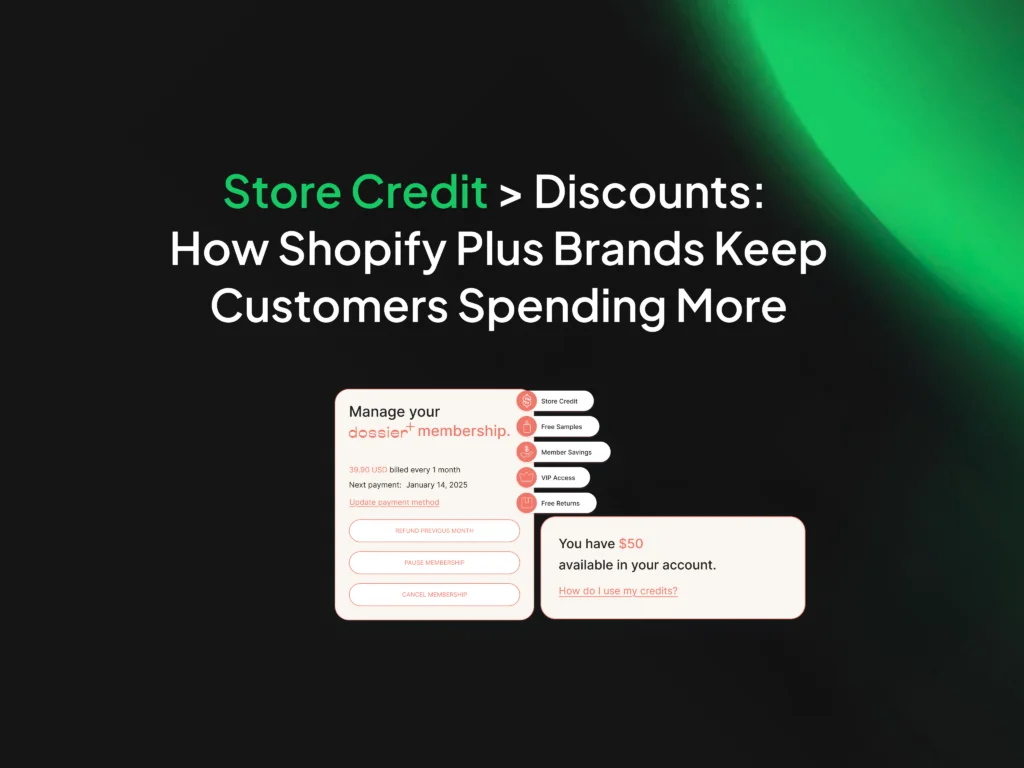
A shopper pays a recurring monthly or annual fee to join. In return, they receive store credit equal to what they paid, plus exclusive perks like early access, free shipping, or member-only pricing.
The credit is not a discount. Whatever a member pays comes straight back to them as credit to spend freely across your catalog. It feels like a benefit, not a cost. And because new credit is issued every month, there is always a reason to come back.
The result: customers who are invested. They browse more, spend more, and return more often. And the membership fee itself becomes a predictable revenue stream that does not depend on ads or promotions.
This is not a points program with better branding. It is a structural shift in how your best customers relate to your brand.
Turning Retention Into Predictable Growth
Most ecommerce brands share the same challenges: high churn, low repeat rates, rising CAC, and loyalty programs that underperform. They understand the problem. They just do not have a system built to solve it.
The brands beating these stats have one thing in common: they stopped treating retention as a campaign and started treating it as infrastructure.
Subscribfy helps brands build that infrastructure. Across Subscribfy’s membership programs, the impact is consistent and measurable:
30%+ member participation rates
AOV 15 to 20% higher for members than non-members
LTV gains of 2 to 4x within the first year
The numbers above describe where most brands are today. They do not have to describe yours.